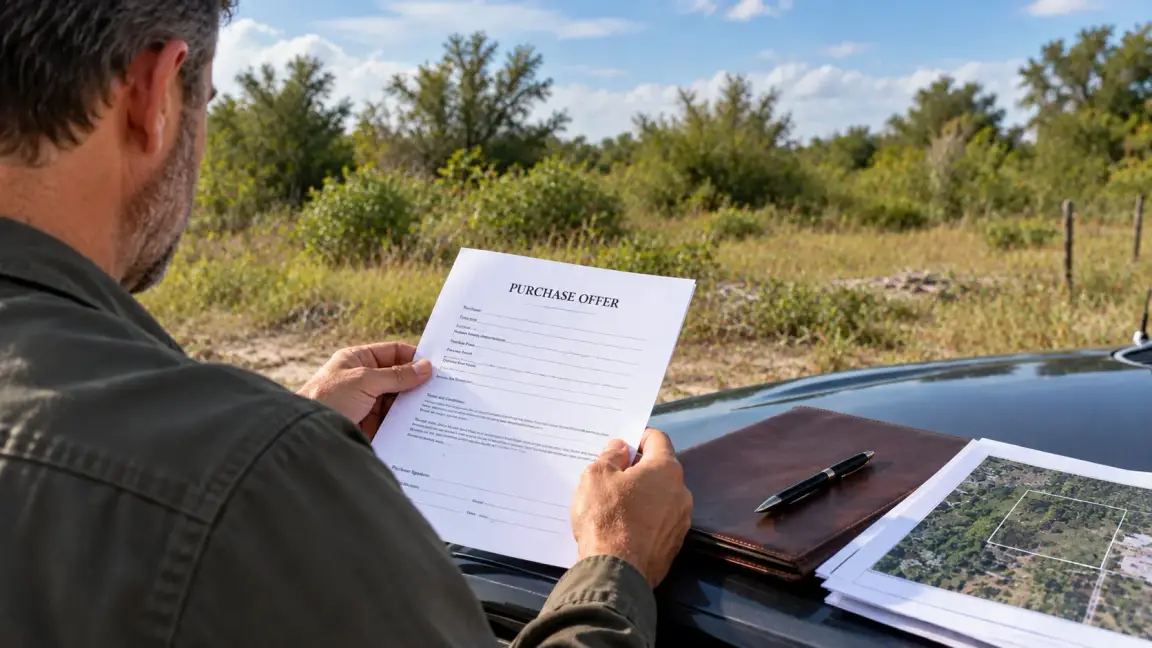

Selling vacant land directly for cash can eliminate some of the steps involved in a traditional real estate listing, but not every cash offer is the same.
Before choosing a cash land buyer in Houston, find out who is actually buying your property, how the offer was calculated, whether the buyer has the ability to close, what contingencies apply, who pays transaction costs, whether the contract can be assigned, and how much you should expect to receive at closing.
A professional buyer should be willing to explain the transaction clearly.
Here are 10 things Houston landowners should evaluate before accepting a cash offer.
How Do I Choose a Cash Land Buyer in Houston?
Choose a Houston cash land buyer by evaluating the buyer’s identity, company information, offer process, ability to fund the purchase, fees, closing costs, contingencies, assignment terms, title process, purchase agreement, and expected net proceeds.
Don’t choose a buyer solely because they promise the highest price or fastest closing.
The written terms matter just as much as the headline offer.
1. Confirm Whether They Are Actually Buying the Property
Start with a basic question:
“Are you the actual buyer of my land?”
A direct buyer purchases the property rather than acting as your listing agent.
That distinction matters.
A real estate agent typically represents a party in a transaction and may market property on behalf of a seller. A direct land buyer is purchasing for its own account or investment purposes.
There are also investors whose business models involve putting properties under contract and assigning contractual rights to another party.
Assignment itself isn’t necessarily a problem. The important issue is understanding what the person or company intends to do.
Questions to ask
Ask the prospective buyer:
- Are you purchasing this property directly?
- Will your company be named as the buyer?
- Are you planning to close on the property yourself?
- Can the purchase agreement be assigned?
- Are you representing another buyer?
- Are you acting as a real estate broker or salesperson in this transaction?
Clear answers make it easier to understand who is involved.
What if someone says they are a Texas real estate agent?
If a person or company represents themselves as a Texas real estate license holder, you can use the Texas Real Estate Commission License Holder Search to verify license information.
However, don’t assume every company buying property for its own account must be a licensed real estate broker merely because it buys land.
The relevant question is what role the person or company is performing in your transaction.
2. Look for Real Company Information
Before signing a contract, research the buyer.
A professional online presence alone doesn’t prove that a buyer is trustworthy, but you should be able to determine basic information about who you’re dealing with.
Look for:
- Company name
- Contact information
- Business website
- Local market information
- Explanation of the buying process
- Names of people involved
- Clear terms
- Privacy/contact information
- Consistent business identity
You can also search the company name independently rather than relying only on information the buyer sends you.
Look beyond reviews
Online reviews can be useful, but don’t treat a star rating as your entire due-diligence process.
Reviews can provide context about customer experiences, but contract terms, funding capability, communication, and transaction structure matter more than a rating alone.
Local knowledge can help
Houston-area land can involve issues such as:
- Flood exposure
- Drainage
- Access
- Utilities
- Platting
- Deed restrictions
- Development regulations
- Title complications
- Back taxes
A buyer who regularly evaluates vacant land should be able to explain which property characteristics matter to its offer.
1800LOTS is based in Houston and describes itself as a direct buyer of vacant, raw, rural, suburban, infill, and certain commercial land. You can learn more about the company on the About 1800LOTS page.
3. Ask How the Cash Offer Was Calculated
You don’t necessarily need access to every detail of a buyer’s investment model.
But you should be able to ask:
“How did you arrive at this offer?”
Vacant-land buyers may consider factors such as:
- Recent comparable land sales
- Location
- Acreage
- Parcel shape
- Access
- Utilities
- Flood characteristics
- Restrictions
- Development potential
- Market demand
- Holding costs
- Resale risk
- Transaction costs
- Required return
An offer can differ from an estimated retail-market value because an investor is purchasing the property as a business investment.
Cash offer vs. retail price
This distinction is important.
A direct cash buyer is generally not offering the same service as a real estate agent listing your land to seek a retail buyer.
A direct buyer is making an offer to purchase the property itself.
That can provide advantages such as fewer selling steps or an as-is transaction, depending on the agreement, but the offer may be lower than the price a seller hopes to achieve through full market exposure.
How does 1800LOTS calculate offers?
According to the 1800LOTS FAQ, the company considers comparable properties, market conditions, costs associated with the transaction and resale, and its required profit when developing an offer.
That’s the type of explanation you should seek from any buyer: not necessarily an appraisal, but a clear explanation of the basic factors influencing the offer.
4. Ask for Evidence They Can Complete the Purchase
The words “cash buyer” sound reassuring.
But you still need to understand what the term means in the proposed transaction.
Ask:
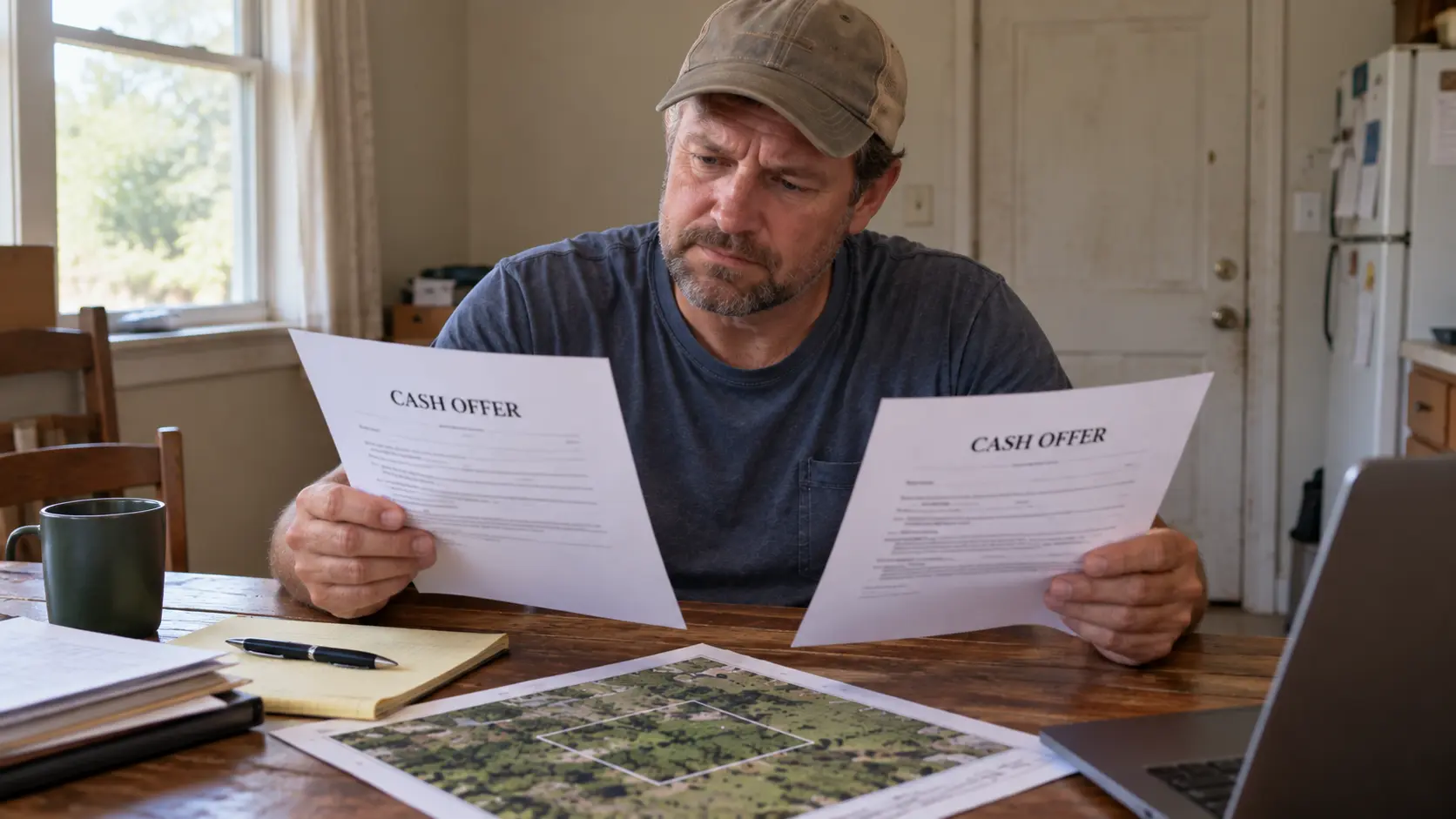
- Is the purchase dependent on bank financing?
- Can the buyer provide reasonable evidence of funds when appropriate?
- Is another investor needed before closing?
- Is the buyer relying on resale or assignment?
- When will funds be available?
- Who will coordinate closing?
A buyer making a cash offer should be able to explain how the transaction is expected to be funded.
Why proof of funds can matter
Imagine receiving two offers.
Buyer A offers $75,000 but cannot clearly explain how the purchase will be funded.
Buyer B offers $70,000 and demonstrates a clear ability and process to close.
That does not automatically make Buyer B’s offer better.
But funding certainty is a factor worth considering alongside price.
Don’t confuse an offer with a completed sale
An accepted contract is not the same as money in your account.
Title work, due diligence, contractual conditions, and closing still have to occur.
That is why you should evaluate the buyer’s ability to perform—not just the initial offer.
5. Understand Every Fee and Closing Cost
Ask this before signing:
“What will I have to pay?”
Potential costs in a land transaction can include:
- Agent commissions
- Title-related costs
- Escrow charges
- Recording-related expenses
- Survey costs
- Legal expenses
- Seller concessions
- Property taxes
- Lien payoffs
- Other agreed transaction expenses
Not every transaction includes all of these costs.
What matters is knowing which party is responsible for what.
Get the answer in writing
If a buyer tells you:
“There are no seller fees.”
make sure the written agreement and closing documents are consistent with that statement.
Likewise, if a buyer says it will pay closing costs, ask what the buyer means by “closing costs” and whether there are exclusions.
How does 1800LOTS handle fees?
1800LOTS states in its FAQ that its direct purchases do not charge sellers agent commissions or hidden fees and that it assumes the associated administrative and closing costs described in its offer process.
Its Houston land-buying page likewise states that there are no agent commissions or seller closing costs in its direct purchases.
As with any transaction, review the actual written offer and closing documents for your specific property.
6. Review the Due-Diligence Period and Contingencies
An offer price can look excellent until you read the conditions attached to it.
A purchase agreement may give the buyer time to investigate:
- Title
- Survey
- Access
- Utilities
- Flood conditions
- Restrictions
- Environmental matters
- Development potential
- Other property characteristics
The contract may also establish circumstances under which the buyer can terminate.
Ask these questions
Before accepting an offer, determine:
How long is the due-diligence period?
What can the buyer investigate?
Can the buyer terminate during that period?
Is any part of the earnest money refundable?
Does the offer depend on financing?
Are there other contingencies?
What happens after due diligence expires?
A buyer requesting reasonable time to investigate a property is not automatically a red flag.
Vacant land often requires due diligence.
The key is understanding how much uncertainty remains after you sign.
Compare certainty as well as price
An offer with fewer contingencies may provide more certainty than a higher offer with broad cancellation rights.
But fewer contingencies do not automatically make an offer financially better.
Compare both.
7. Find Out Whether the Contract Can Be Assigned
This is one of the most overlooked questions in direct real estate transactions.
Ask:
“Can you assign this contract to another buyer?”
An assignment provision may allow the original buyer to transfer contractual rights to another party.
Again, assignment is not automatically improper.
The important thing is knowing whether it can happen.
Why sellers should care
You may believe you’re entering a transaction with Company A.
If the agreement is assignable, someone else may ultimately become involved in the purchase, depending on the contract.
That can matter if your decision was based partly on:
- Who the buyer is
- Their financial capability
- Their reputation
- Their proposed timeline
- Their experience
Read rather than assume
Don’t rely only on what someone tells you over the phone.
Look at the actual assignment language in the purchase agreement.
If you do not understand its legal effect, ask a qualified Texas real estate attorney to review it.
8. Understand How Title Problems Are Handled
Vacant land can have complicated ownership histories.
Potential title-related issues include:
- Unreleased liens
- Delinquent taxes
- Multiple owners
- Deceased owners
- Inherited property
- Probate issues
- Judgment liens
- Errors in prior deeds
- Easements
- Other recorded interests
Ask the buyer:
“What happens if the title company finds a problem?”
Will the buyer immediately cancel?
Maybe.
Or the parties may have time under the contract to address the issue.
The answer depends on the buyer, title problem, and agreement.
A buyer experienced with vacant land may be familiar with common title complications, but no reputable company should promise that every title problem can always be solved.
Don’t hide known issues
If you know that:
- Taxes haven’t been paid,
- The owner named on the deed is deceased,
- Several heirs may own the property, or
- A lien exists,
mention it early.
That gives the buyer and title professionals more time to determine what is required.
1800LOTS states on its About page that it encounters vacant-land transactions involving title issues, unpaid taxes, and inherited ownership situations.
For legal questions about ownership, liens, probate, or your rights under a contract, consult a qualified Texas attorney or appropriate title professional.
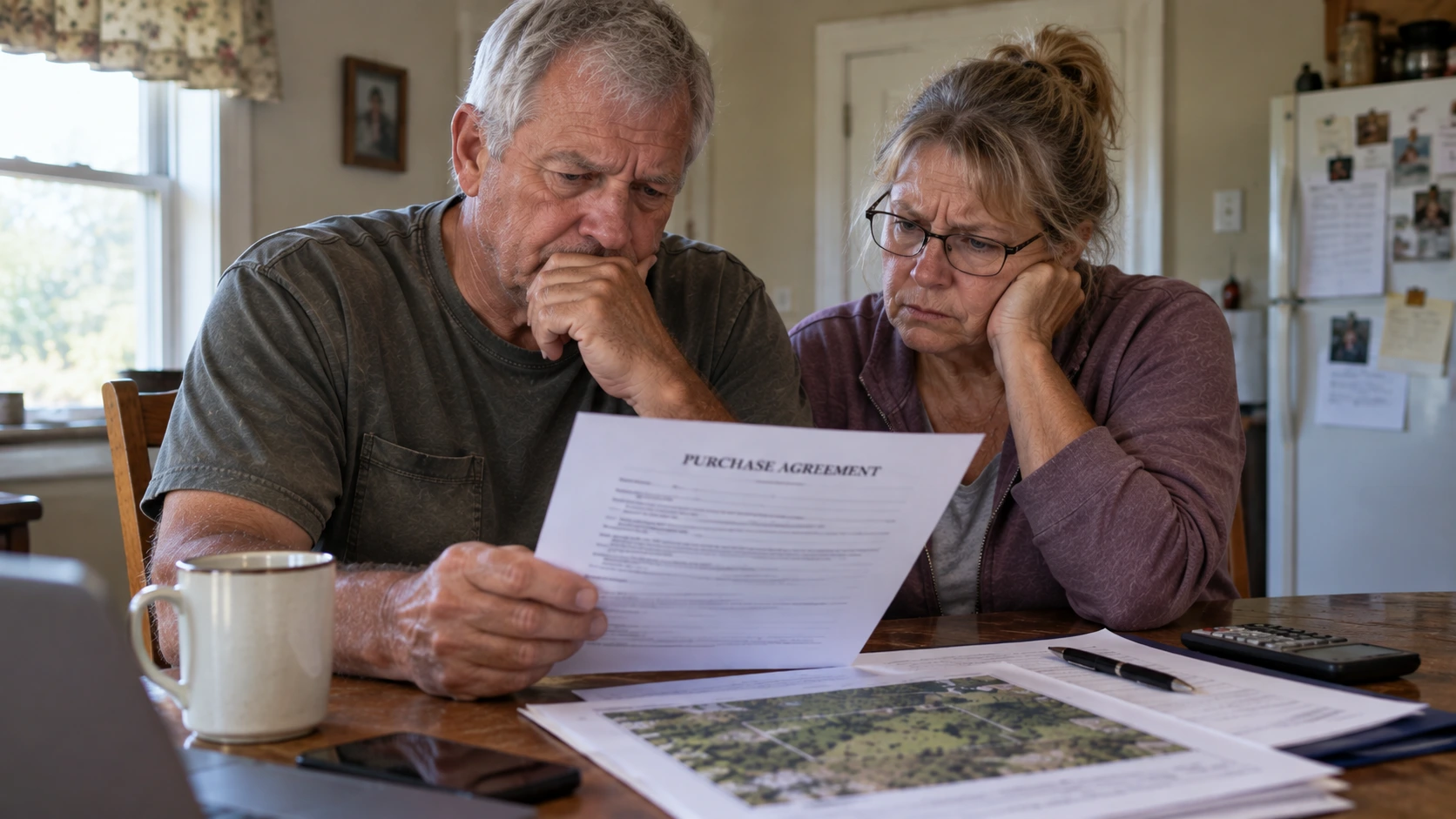
9. Read the Purchase Agreement Carefully
The purchase agreement matters more than the sales pitch.
It may establish:
- Purchase price
- Property being purchased
- Earnest money
- Due-diligence period
- Closing date
- Title requirements
- Survey obligations
- Contingencies
- Seller obligations
- Buyer obligations
- Closing expenses
- Assignment rights
- Termination rights
- Special provisions
Do not sign simply because someone tells you:
“It’s just a standard contract.”
Read it.
What should you check first?
Pay particular attention to:
Buyer name: Who is actually entering the contract?
Property description: Is the correct property being sold?
Price: Does it match what you agreed to?
Closing date: When is the buyer required to close?
Contingencies: What still has to happen?
Termination: When can either party walk away?
Costs: Who pays what?
Assignment: Can the buyer transfer the agreement?
Seller obligations: What are you required to do?
Texas unimproved-property contracts
The Texas Real Estate Commission Unimproved Property Contract is an official form used in appropriate transactions involving unimproved property. TREC currently lists Form 9-18 as effective July 1, 2026.
That does not mean this particular form is required or appropriate for every direct land transaction.
The contract used depends on the circumstances.
If you need advice about what a contract means or whether its provisions protect your interests, consult a qualified Texas real estate attorney.
10. Compare the Complete Transaction, Not Just the Offer Price
Suppose you receive three offers:
| Offer | Price | Financing | Seller Costs | Due Diligence | Closing |
| A | $80,000 | Financing required | Some seller-paid costs | 45 days | 60+ days |
| B | $75,000 | Cash | Limited seller costs | 21 days | 30 days |
| C | $70,000 | Cash | Buyer pays agreed closing costs | 10 days | Potentially sooner |
These numbers are illustrative only.
Which offer is best?
You cannot tell from this table alone.
Offer A has the highest price.
Offer C may provide greater speed.
Offer B may offer a balance.
The best choice depends on your priorities and the actual contract.
Calculate your expected net proceeds
Think in terms of:
Purchase price
− seller-paid transaction costs
− commissions
− outstanding obligations
− other agreed deductions
= estimated net proceeds
Then consider factors that don’t fit neatly into the calculation:
- Closing certainty
- Speed
- Convenience
- Required improvements
- Contingencies
- Buyer credibility
- Your reason for selling
The best transaction for one Houston landowner may not be the best transaction for another.
For a broader comparison of selling methods, review the 1800LOTS guide to options for selling land before making your decision.
12 Questions to Ask a Houston Cash Land Buyer
Before accepting a cash offer for vacant land, ask:
- Are you purchasing my property directly?
- Will your company be named as the buyer in the contract?
- How did you calculate your offer?
- Can you demonstrate your ability to fund the purchase when appropriate?
- Does the transaction depend on financing?
- How long is your due-diligence period?
- Under what circumstances can you cancel?
- Can you assign the purchase agreement?
- Who pays the closing costs?
- Will I pay any commissions or other seller fees?
- What happens if a title problem is discovered?
- What amount should I expect to receive at closing, subject to taxes, liens, prorations, and other property-specific obligations?
Save this list before speaking with prospective buyers.
A credible buyer should be comfortable answering reasonable questions about the proposed transaction.
For additional preparation, read 10 Questions to Ask Before Selling Vacant Land in Houston before evaluating an offer.
Red Flags to Watch for When Choosing a Cash Land Buyer
No single warning sign proves that a buyer is illegitimate.
However, slow down and investigate further if you encounter behavior such as:
- Pressure to sign immediately
- Refusal to identify the actual buyer
- Important promises that do not appear in writing
- Vague answers about funding
- Unexplained fees
- Major differences between verbal and written terms
- Refusal to let you review the agreement
- A property description that does not match your parcel
- Changes to the price or material terms you don’t understand
- Requests to conceal information from a title company or another party
- Claims that legal review is unnecessary
- Guarantees that every title problem can be solved
Trust is useful.
Verification is better.
If someone claims to be a licensed Texas real estate professional, verify that representation through the Texas Real Estate Commission License Holder Search.
And if a contract provision is unclear, obtain independent legal advice before signing.
How Does 1800LOTS Compare With This Checklist?
You should evaluate 1800LOTS using the same standards you would use for any other Houston land buyer.
Here is what the company currently says about its process:
Is 1800LOTS a direct land buyer?
Yes. 1800LOTS describes itself as a direct purchaser of vacant and undeveloped land rather than an agent listing property for sellers.
How does 1800LOTS determine its offers?
According to the 1800LOTS FAQ, the company evaluates comparable properties, market conditions, transaction/resale considerations, and its required profit when developing an offer.
Does requesting an offer create an obligation to sell?
No. 1800LOTS states that owners can review its offer and decide whether they want to proceed.
Does 1800LOTS charge an agent commission?
1800LOTS states that its direct purchases do not involve a seller-paid real estate agent commission.
Who pays closing costs?
The company states that it pays the closing costs associated with its direct purchases. Sellers should still review the actual written agreement and closing statement for their individual transaction.
Does 1800LOTS buy difficult properties?
The company states that it evaluates raw, vacant, rural, suburban, infill, and certain commercial parcels and encounters situations involving inherited ownership, unpaid taxes, and title complications.
How does the process begin?
According to the Houston cash land buyer page, owners begin by providing basic information about their property. 1800LOTS reviews the land and presents a no-obligation cash offer.
If the offer works for you, the transaction moves toward title and closing.
You can also review the 1800LOTS FAQ before deciding whether a direct sale fits your goals.
Frequently Asked Questions
How do I choose a cash land buyer in Houston?
Choose a cash land buyer by verifying who is actually purchasing the property, researching the company, understanding how the offer was calculated, confirming funding, reviewing fees and closing costs, checking contingencies and assignment rights, and carefully reading the purchase agreement before signing.
Are cash land buyers legitimate?
Many legitimate businesses purchase vacant land directly for investment. However, sellers should evaluate each buyer individually. Verify the company’s identity, understand the contract, ask how the transaction will be funded, review fees and contingencies, and obtain professional advice when necessary.
Should a cash land buyer provide proof of funds?
It can be reasonable to ask a prospective cash buyer for evidence of its ability to complete a purchase, particularly when funding certainty is important to your decision. The form and timing of that evidence can vary by transaction.
Do cash land buyers need a Texas real estate license?
A person or company purchasing real estate for its own account is not automatically acting as a real estate broker simply because it buys property. Licensing questions depend on the activities being performed. If someone claims to be a Texas real estate license holder, you can verify the claim through TREC’s official license search.
Do Houston cash land buyers pay closing costs?
It depends on the buyer and agreement. Never assume. Ask which closing costs the buyer will pay and verify those terms in writing. 1800LOTS states that it covers closing costs in its direct purchases.
Should I accept the highest cash offer for my land?
Not automatically. Compare expected net proceeds, contingencies, due diligence, funding, closing date, seller obligations, buyer credibility, and other contract terms. A higher headline offer may or may not produce the best overall outcome.
Can a cash land buyer back out after I sign?
That depends on the purchase agreement. A contract may contain due-diligence rights, contingencies, termination provisions, or other conditions. Read these provisions before signing so you understand when the buyer can terminate.
Can I sell land with back taxes or title problems?
Potentially. Taxes, liens, inherited ownership, and other title complications can affect closing but do not necessarily prevent you from exploring a sale. The appropriate solution depends on the specific property and issue.
Conclusion
Choosing the right cash land buyer in Houston involves much more than comparing offer prices.
Before selling, find out who is actually buying the property, how the offer was calculated, whether the buyer can fund the transaction, what fees you will pay, how long due diligence lasts, whether the agreement can be assigned, how title problems will be handled, and what the contract actually requires.
Most importantly, compare net proceeds and complete transaction terms, not just the number at the top of an offer.
If you’re considering a direct sale, apply this same checklist to 1800LOTS.
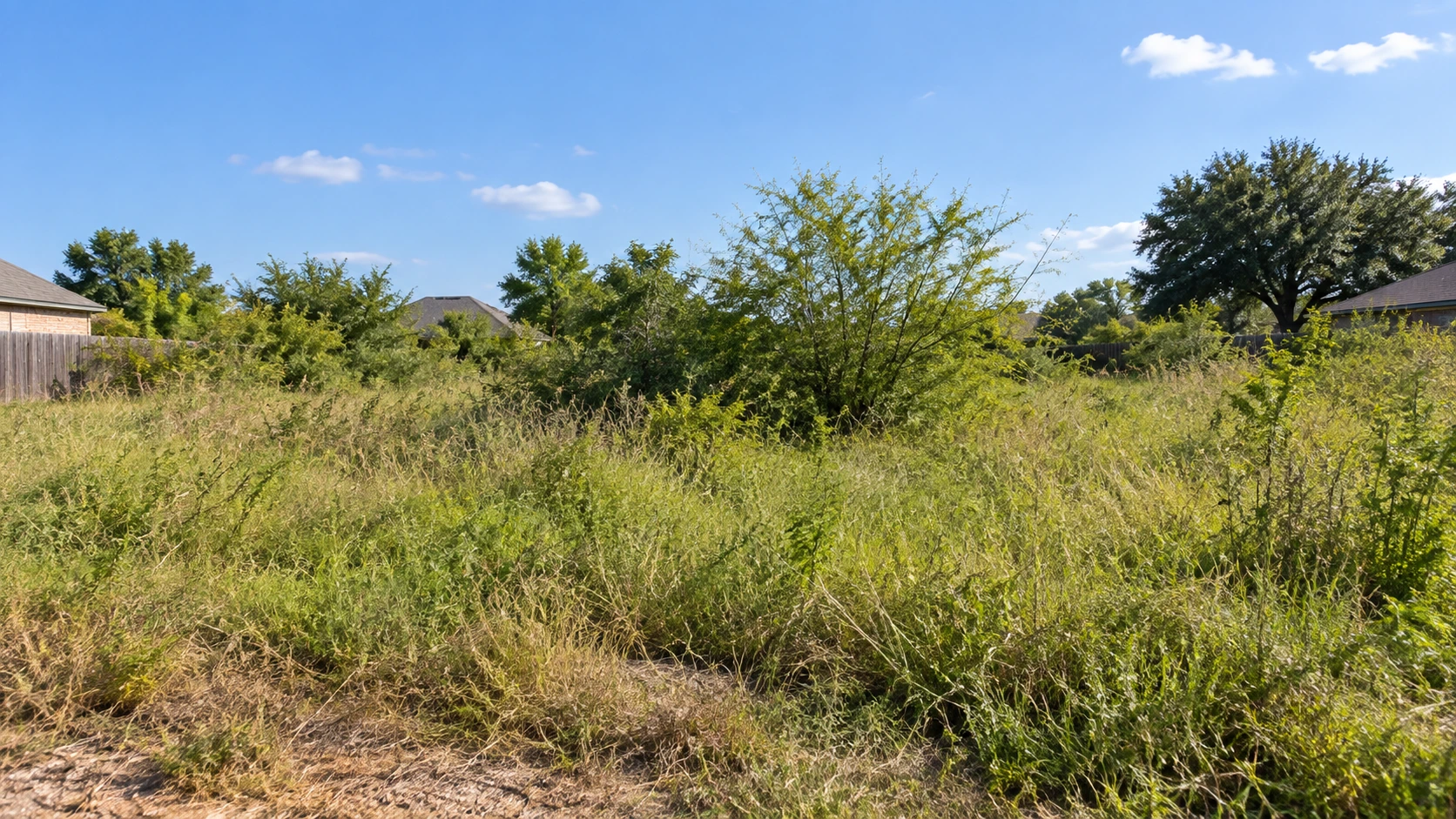
Review the company’s process, ask questions, read the written offer, and compare it with your alternatives.
1800LOTS purchases vacant and undeveloped land directly in Houston and surrounding areas. The company states that its offers are cash, there is no obligation to accept, seller agent commissions are not charged in its direct purchases, and it covers its stated closing costs.
Request a cash offer for your Houston-area land and decide whether the complete terms fit your goals.
Get Started: Get a Cash Offer Below…
We are direct lot buyers. There are no commissions or fees and no obligation whatsoever. Start below by sharing where your property is and where we can send your offer…