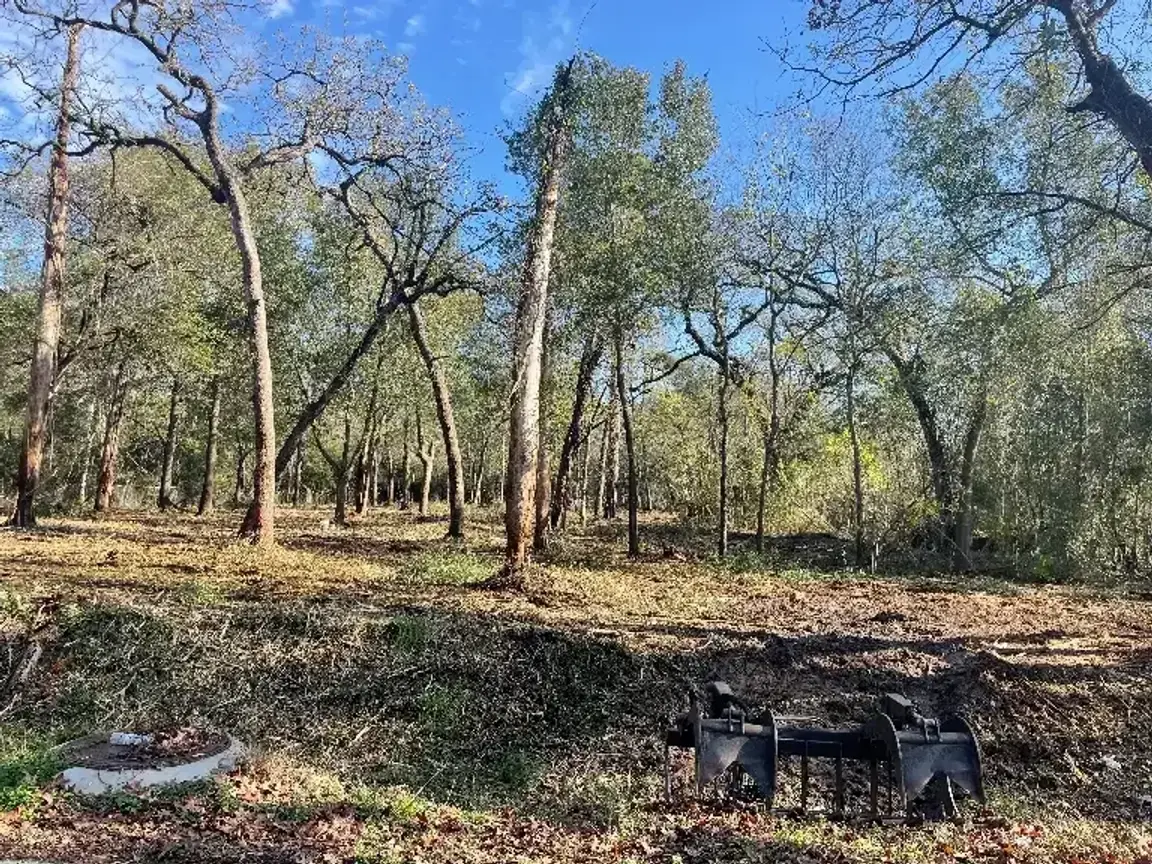

Vacant land can look simple from the road.
No house to inspect. No roof to replace. No tenants to deal with. Just a piece of property waiting for someone to buy it.
So why can selling it be so complicated?
Maybe you’ve owned a Houston lot for years and assumed finding a buyer would be straightforward. Perhaps you inherited acreage you’ve never visited. Or maybe someone has already told you the property is worth less than you expected, and you’re trying to understand why.
The answer often comes down to what a buyer can actually do with the land—and what it might cost to get there.
What makes vacant land hard to sell in Houston?
Vacant land in Houston can be difficult to sell when it has limited legal access, expensive utility connections, flood or drainage concerns, awkward dimensions, development restrictions, environmental issues, unclear boundaries, title problems, or significant costs associated with making it usable. These conditions can reduce the number of interested buyers, complicate financing or development, and affect the price someone is willing to pay.
But difficult doesn’t necessarily mean unsellable.
The important thing is understanding which obstacles apply to your property, how serious they are, and whether they need to be resolved before you sell.
Here are nine things worth investigating.
1. The Property Doesn’t Have Clear Legal Access
Imagine finding an affordable piece of land in Houston.
It’s a good size. The surrounding area looks promising. The price seems reasonable.
Then you discover there’s no obvious way to reach it from a public road.
That’s a problem.
A buyer may be willing to purchase land with difficult access, but they’ll want to understand exactly what they’re getting.
There are several possibilities.
The property may have direct public-road frontage. It may rely on a recorded access easement across another parcel. Or the owner may have been using a private road or informal route for years without knowing whether that access is legally protected.
Those situations aren’t interchangeable.
Physical access doesn’t automatically mean legal access.
A dirt road visible on satellite imagery doesn’t prove the owner has a permanent legal right to use it.
Likewise, a parcel that touches a road on a map may still have practical access limitations.
Why buyers hesitate
Uncertain access can affect the property’s usability, financing, development potential, and future resale.
A buyer may have to investigate easements, obtain legal advice, or negotiate access rights.
Those steps involve cost and uncertainty.
What you can do
Start with the deed, survey, recorded plat, and any easement documents.
If the land is in Harris County, the Harris County Clerk’s Real Property Records Search can help you research recorded documents.
If access rights remain unclear, consider speaking with a Texas real estate attorney or qualified surveyor.
You don’t necessarily have to resolve every issue before speaking with buyers.
But you should avoid advertising the land as having legal access unless you can support that claim.
2. Utilities Are Missing or Difficult to Connect
A vacant lot with water, sewer, and electricity nearby can be very different from one that requires substantial infrastructure work.
Even if the properties are the same size.
For someone hoping to build, utility availability can be one of the first things they investigate.
Buyers may ask:
- Is electricity available at the property?
- Is public water service available?
- Is sewer service available?
- Would a septic system need to be evaluated?
- Are utility lines nearby?
- Are additional easements required?
- What would connection work involve?
The phrase “utilities nearby” doesn’t answer those questions.
A utility line running along a road doesn’t necessarily mean the property can connect to it without additional requirements or expense.
Why buyers hesitate
Utility uncertainty makes it harder to estimate the total cost of using or developing the land.
A buyer may be comfortable paying for the parcel itself but unwilling to take on unknown infrastructure costs.
And the less information available, the more cautious some buyers become.
What you can do
Identify the relevant service providers and ask what information they can provide about service availability.
Keep written responses or reference numbers when possible.
If service hasn’t been confirmed, say so.
For example:
“Public utility availability and connection requirements have not been independently verified.”
That’s more useful—and more credible—than promising something you don’t know.
You don’t need to make the property perfect.
You need to help buyers understand what they’re evaluating.
3. Flooding, Drainage, or Low-Lying Areas Limit Its Appeal
Water is a serious consideration for Houston-area land.
But the issue isn’t as simple as asking whether a parcel is “in a flood zone.”
Buyers may also care about drainage, elevation, ponding, nearby waterways, historical conditions, and how much of the property can realistically be used.
A parcel might have attractive road frontage but contain low-lying areas.
Another may require additional drainage or detention work for a proposed development.
A third may be located near a bayou or drainage channel.
Each situation deserves its own investigation.
Why buyers hesitate
Flood and drainage concerns can influence development feasibility, engineering expenses, insurance considerations, financing, and future marketability.
For some buyers, those issues are manageable.
For others, they’re enough to walk away.
What you can do
Research the property’s mapped flood characteristics and any known drainage issues.
The Harris County Flood Control District’s Flood Education Mapping Tool provides information about mapped floodplains in Harris County.
The tool is educational and does not replace the effective FEMA Flood Insurance Rate Map or a property-specific professional determination.
Also remember that being outside a mapped high-risk flood area doesn’t guarantee a parcel will never flood.
If the property has meaningful drainage or development concerns, a qualified engineer or other appropriate professional may be able to help clarify them.
The goal isn’t to convince every buyer that flood risk doesn’t matter. It’s to understand the actual risk and market the property accordingly.
4. The Lot Is an Awkward Shape or Size
Not all acreage is equally useful.
Consider two vacant lots.
Both are listed as half an acre.
One is relatively rectangular, with practical road frontage and dimensions suitable for a buyer’s intended project.
The other is long, narrow, and irregularly shaped.
On paper, they’re the same size.
In practice, they may offer very different possibilities.
Lot dimensions can affect:
- Building placement
- Driveway access
- Setbacks and building lines
- Parking
- Utility placement
- Drainage design
- Subdivision possibilities
- Overall usable area
A parcel may contain a reasonable amount of land but have relatively little area suitable for a buyer’s intended use.
Why buyers hesitate
Buyers aren’t necessarily paying for square footage alone.
They’re paying for what they believe that square footage can accomplish.
If the shape or dimensions limit practical uses, the potential buyer pool may shrink.
What you can do
Get accurate dimensions.
If you have an existing survey, review it.
If you don’t, determine whether obtaining one would be worthwhile based on the property’s circumstances and the needs of likely buyers.
Avoid relying entirely on approximate measurements from online maps.
And don’t assume a lot can support a particular building or development simply because nearby properties have been developed.
The parcel itself needs to be evaluated.
5. Deed Restrictions or Development Requirements Limit What Buyers Can Do
Houston is famous for not having traditional citywide zoning.
That fact sometimes leads property owners to make a costly assumption:
“If there’s no zoning, someone can build whatever they want.”
Not necessarily.
Depending on the property’s jurisdiction and characteristics, development may still be affected by subdivision requirements, platting, building lines, access standards, parking, floodplain regulations, utility requirements, and other rules.
Private deed restrictions may create additional limitations.
A buyer interested in building townhomes, commercial space, or another project will want to understand whether that use is actually feasible.
Why buyers hesitate
Uncertainty about permitted uses can make it difficult to evaluate a parcel.
A property may look attractive for a particular project until the buyer discovers that restrictions or development requirements change the economics.
That doesn’t necessarily make the land worthless.
It means the original plan may not work.
What you can do
Start by identifying the property’s jurisdiction.
Then research the applicable development requirements and recorded restrictions.
For Harris County parcels, the Harris County Clerk’s public records resources explain how recorded deed restrictions can be researched.
Don’t market speculative development potential as a guarantee.
Instead of promising that a parcel is “perfect for a four-unit development,” explain the property’s known characteristics and encourage independent verification of development feasibility.
A well-informed buyer is more likely to make a serious decision than someone relying on an unsupported promise.
6. Environmental or Physical Conditions Create Additional Costs
Some land looks inexpensive until someone investigates what it would take to use it.
Possible concerns include:
- Unstable or unsuitable soils
- Extensive fill requirements
- Buried debris
- Dumping
- Contamination concerns
- Demolition remnants
- Difficult terrain
- Wet or poorly drained areas
- Other physical site conditions
Not every unusual condition is a dealbreaker.
But it can change the economics.
For example, a buyer planning to build may need to investigate soil conditions before deciding whether the project is financially feasible.
Another buyer may discover that removing debris or addressing a potential environmental issue costs more than expected.
Why buyers hesitate
The main problem is often uncertainty.
A buyer may know the asking price but have no reliable estimate of what site preparation will cost.
If the potential expense is significant, some buyers will reduce their offer or stop pursuing the property.
What you can do
Separate what you know from what you suspect.
If the land has visible debris, document it.
If you have historical reports, inspections, or relevant property records, keep them available.
If contamination is suspected, seek appropriate professional guidance rather than making unsupported assurances.
And don’t spend thousands of dollars clearing or improving the property before understanding whether that work will improve your likely net proceeds.
Sometimes documentation is more valuable than cosmetic improvements.
7. Property Boundaries or Easements Are Unclear
A buyer may love the location and still hesitate because the boundaries aren’t clear.
Maybe an old fence doesn’t line up with the deed.
Maybe a neighbor uses part of the property.
Maybe utility infrastructure crosses the parcel.
Maybe the owner believes the lot is larger than the legal description indicates.
Or perhaps there’s an easement that limits how part of the property can be used.
These issues can be easy to overlook when land has been vacant for years.
Why buyers hesitate
Boundary uncertainty can affect usable area, access, improvements, title review, and future disputes.
Easements can also affect where structures or other improvements may be placed.
The presence of an easement doesn’t automatically make a property difficult to sell.
The problem is not knowing what rights and limitations apply.
What you can do
Gather the deed, recorded plat, existing survey, and any easement documents.
The Texas General Land Office’s archival land and map collections can also provide historical survey and land-record research resources, although those archives are not a substitute for a current boundary survey or title examination.
For property-specific questions, a qualified land surveyor and title professional may be appropriate.
If a buyer asks about boundaries, provide the documents you have rather than guessing where the property ends.
8. Ownership, Liens, or Title Issues Complicate the Sale
Some land is physically easy to use but legally difficult to transfer.
That can happen when a property has been owned by the same family for decades.
A parent dies.
Several children inherit interests.
One person pays the taxes.
Another moves away.
Years later, someone decides to sell, only to discover that the ownership records need attention.
Other possible complications include:
- Unpaid property taxes
- Recorded liens
- Judgments
- Multiple owners
- Deceased owners in the title history
- Missing releases
- Estate or heirship questions
- Ownership disputes
- Errors in recorded documents
Why buyers hesitate
A buyer wants confidence that the seller can transfer the interest promised in the contract.
If that isn’t clear, the transaction may require additional documentation, legal work, or time.
Some buyers will wait.
Others won’t.
What you can do
Identify known title and ownership issues early.
If the property was inherited, confirm who owns it and who has authority to sell.
If there are liens or unpaid taxes, determine what is owed and whether those obligations may be addressed through the transaction.
A title company or appropriate attorney can help identify requirements for a particular sale.
If you’re dealing with inherited property, our guide to 9 Steps to Selling Inherited Land in Houston explains the process in more detail.
The key is not to promise a simple closing when you already know the title situation is complicated.
9. The Cost of Making the Land Usable Is Too High for the Likely Buyer
This final issue often ties the others together.
A parcel may have legal access, but the road needs substantial work.
Utilities may be available, but connecting them could be expensive.
Development may be possible, but the lot requires engineering, drainage improvements, or other site work.
The property isn’t necessarily unusable.
It’s just expensive to make usable.
And that affects what someone may be willing to pay.
Why buyers hesitate
Buyers tend to evaluate more than the purchase price.
They may be thinking about:
Land purchase price + acquisition expenses + site preparation + infrastructure + development costs + risk
A parcel offered at a lower price isn’t automatically the better deal if it requires substantially more work.
That’s why land buyers may discount properties with significant unresolved obstacles.
What you can do
Try to understand the major cost drivers before deciding whether to make improvements or adjust your expectations.
You don’t necessarily need detailed engineering estimates for every issue.
But if buyers repeatedly mention the same expense, take that feedback seriously.
And remember:
Money spent improving land doesn’t automatically return dollar for dollar in the sale price.
Before making an improvement, compare the likely increase in net proceeds with the cost of the work.
If the numbers don’t support it, selling the land in its current condition may be worth considering.
Does Difficult-to-Sell Land Mean the Property Has No Value?
No.
This is an important distinction.
Land can be difficult to sell because it appeals to a smaller group of buyers.
That doesn’t mean nobody wants it.
A parcel with limited access may interest an adjoining owner.
A lot with unusual dimensions may work for a use that doesn’t require conventional development.
A property with substantial site-preparation costs may still interest a buyer who understands those costs.
The question becomes:
Who can realistically use this property, and what would they be willing to pay after accounting for its limitations?
That’s a different question from whether the property is “good” or “bad.”
And it’s usually a much more productive one.
Which Land Problems Are Fixable Before You Sell?
Not every obstacle requires the same response.
Some are information problems.
Some are legal problems.
Some are physical problems.
And some may be more expensive to correct than they’re worth.
| Potential Obstacle | What It Can Affect | Possible Next Step |
|---|---|---|
| Unclear legal access | Usability, buyer confidence | Review recorded access documents |
| Missing utilities | Development costs | Verify service availability |
| Flood or drainage concerns | Feasibility, insurance, site costs | Research mapping and site conditions |
| Awkward lot dimensions | Buildable area, buyer pool | Review survey and intended uses |
| Deed restrictions | Permitted uses | Research recorded restrictions |
| Physical/environmental conditions | Site preparation, risk | Obtain appropriate professional information |
| Unclear boundaries or easements | Usable area, title | Review survey and recorded documents |
| Ownership/title issues | Ability to close | Consult title/legal professionals |
| High improvement costs | Buyer economics, offer price | Compare as-is sale with improvements |
The most useful next step is identifying whether the obstacle is:
Documentable: Better information may reduce uncertainty.
Resolvable: A specific action may correct the issue.
Permanent or costly: The property’s pricing and buyer strategy may need to reflect it.
That distinction can save you from spending money on the wrong problem.
Should You Fix the Problems or Sell the Land As-Is?
Suppose your land has several obstacles.
You could spend money trying to make it more attractive.
Or you could market it in its current condition.
Which approach makes more sense?
Start with the economics.
Expected sale price after improvements − improvement costs − additional holding/selling expenses = estimated net proceeds after improvements
Compare that with:
Expected as-is sale price − as-is selling expenses = estimated net proceeds from an as-is sale
These are planning estimates, not guaranteed outcomes.
For example, imagine you expect a parcel to sell for $70,000 in its current condition.
You believe $15,000 of work could increase the sale price to $80,000.
Even before accounting for additional carrying costs or transaction expenses, that improvement plan may leave you worse off.
Of course, some improvements can materially change marketability.
The point is to calculate rather than assume.
If you haven’t decided how to sell, review the different options for selling vacant land before committing to expensive work.
What If You Can’t Afford to Fix the Land?
You may still have options.
Not every buyer expects land to be fully prepared for development.
Some buyers are willing to evaluate properties with access questions, utility limitations, difficult terrain, or other complications.
That doesn’t mean they’ll ignore the issues.
They’ll usually account for them when deciding whether to purchase and what to offer.
Depending on your circumstances, you could explore:
- Selling to an adjoining owner
- Marketing to buyers familiar with the property’s limitations
- Listing with a land-focused broker
- Selling in its current condition
- Requesting an offer from a direct land buyer
The right route depends on the property and what you value most: broad exposure, net proceeds, speed, simplicity, or reduced seller involvement.
If your property has already been listed without success, see 10 Reasons Your Vacant Land Isn’t Selling in Houston for a separate diagnosis of pricing, marketing, buyer targeting, and transaction problems.
How Do Buyers Evaluate Hard-to-Sell Land?
Different buyers may approach the same parcel differently.
A neighboring owner may see value in extra space.
A builder may focus on development feasibility.
An investor may focus on holding costs and resale potential.
A direct land buyer may evaluate the parcel’s expected value alongside transaction expenses, risk, and a required business margin.
There’s no universal formula that every buyer uses.
But a useful conceptual framework is:
Expected property value − anticipated property costs − transaction/holding costs − risk allowance − required margin = potential direct purchase offer
This is an illustrative model, not a representation of a particular buyer’s exact pricing formula.
It helps explain why two buyers may arrive at very different offers for the same property.
They may have different intended uses, cost structures, risk tolerances, or exit strategies.
Before accepting an offer, compare more than the price.
Consider seller-paid expenses, contingencies, closing requirements, timeline, and estimated net proceeds.
Can You Sell Difficult Land Directly to 1800LOTS?
If you own vacant or undeveloped land in the Houston area, requesting a direct offer may be one option to explore.
1800LOTS evaluates properties for potential direct purchase.
That doesn’t mean every parcel will qualify, or that access, title, flood, utility, or other issues can simply be ignored.
Those characteristics may affect whether the company is interested and the terms of any offer.
But you don’t necessarily have to solve every property issue before asking whether a direct buyer would consider it.
You can review how 1800LOTS buys land in Houston and the 1800LOTS FAQ to understand the company’s approach.
If you want to compare a direct offer with a traditional listing or another option, you can request a no-obligation offer.
An offer gives you information.
It doesn’t mean you have to accept it.
Frequently Asked Questions About Hard-to-Sell Land in Houston
What makes vacant land hard to sell in Houston?
Common obstacles include unclear legal access, unavailable or expensive utilities, flood and drainage concerns, irregular lot dimensions, development restrictions, physical or environmental issues, boundary uncertainty, title problems, and high costs associated with making the land usable.
Can you sell land in Houston without road access?
Potentially, yes. But limited or unclear legal access can reduce the number of interested buyers and affect the price. Determine whether recorded access rights exist before making claims about access.
Is land in a floodplain hard to sell?
It can be, depending on the property, intended use, development requirements, and buyer. Floodplain location doesn’t automatically make land unsellable, but buyers may account for additional risk and potential costs.
Can I sell land without water or electricity?
Potentially. Buyers may still be interested, but the absence of utilities can affect what the property can be used for and what buyers are willing to pay.
Do deed restrictions make land harder to sell?
They can if they limit uses that buyers want. The impact depends on the specific restrictions and the type of buyer.
Does an irregularly shaped lot have less value?
Not necessarily. Shape matters because it can affect usable area and development feasibility. The impact depends on the parcel’s dimensions, location, and intended use.
Can I sell land with title problems?
Potentially. Some title issues can be resolved before or during a transaction, while others may require additional legal work or prevent a particular sale from closing until addressed.
Should I clear or improve difficult land before selling?
Not automatically. Compare the likely increase in net proceeds with the cost of improvements. Some work may help marketability, while other expenses may not pay for themselves.
Can I sell difficult land as-is?
Potentially. Some buyers evaluate vacant land in its current condition, although known issues may affect interest, price, and contract terms.
Will a cash land buyer purchase property with problems?
Some direct buyers consider properties with complications, but acceptance depends on the parcel and the buyer’s criteria. A direct offer may reflect the costs and risks associated with those conditions.
Difficult Land Doesn’t Have to Mean a Dead End
It’s easy to look at a challenging parcel and focus on everything that’s wrong with it.
- No utilities.
- Questionable access.
- Drainage concerns.
- An awkward shape.
- Old title paperwork.
- Development limitations.
Those things matter.But they don’t tell the whole story.
The real question is whether the property has a realistic buyer at a price and under terms that make sense for both sides.
Sometimes the answer is to gather better information. Sometimes it’s to resolve a title issue. Sometimes an improvement is worth making. And sometimes the better decision is to stop spending money trying to make the land something it isn’t.
If you’re weighing your next move, start by reviewing the options for selling vacant land.
If a traditional sale hasn’t worked, you can also explore the reasons Houston land may not be selling.
And if you’d like to know whether a direct sale is worth considering, review the 1800LOTS selling process or request a no-obligation offer.
You may discover the property needs more work than you expected.
Or you may discover that the right buyer simply evaluates the land differently.
Either way, understanding the obstacles gives you a better place to start than assuming the land can’t be sold.
This article provides general educational information and is not legal, engineering, surveying, environmental, or financial advice. Property conditions, development feasibility, ownership, title, and transaction outcomes depend on the specific parcel and circumstances.