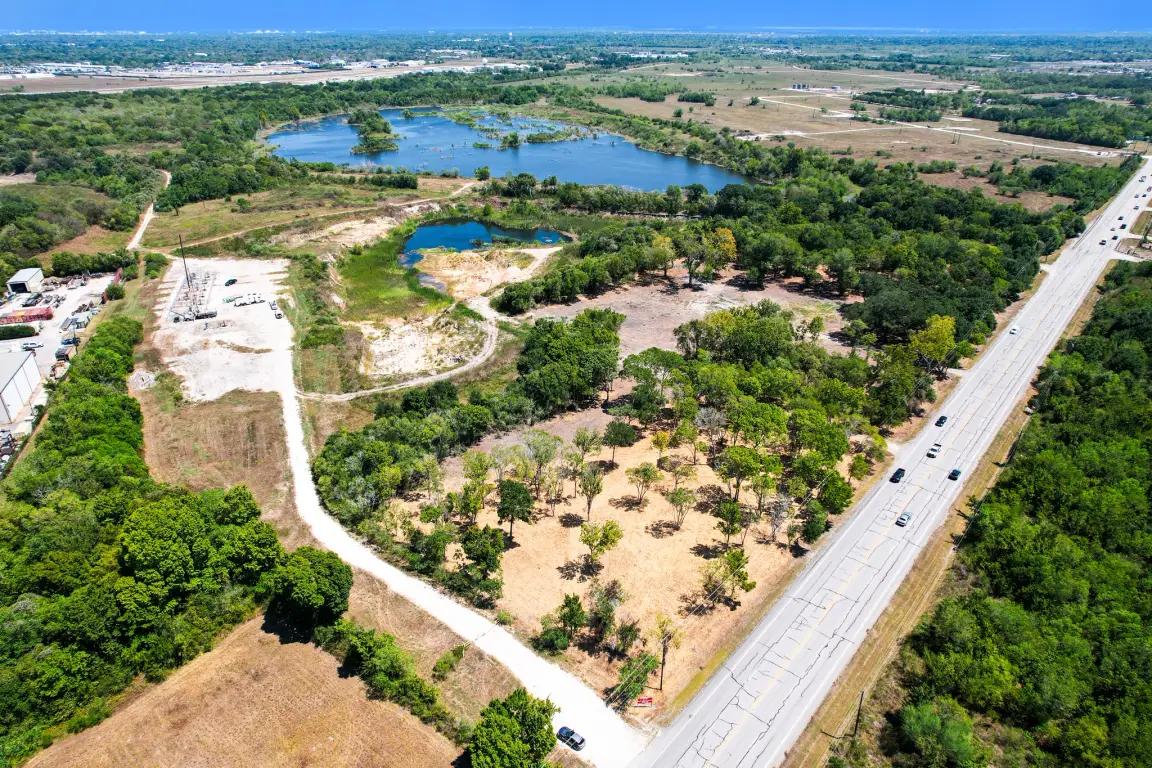

You listed the land.
Weeks passed.
Maybe months.
A few people asked questions. Someone may have made a low offer. Maybe you’ve had plenty of views online but almost no serious interest.
Now you’re wondering:
Why isn’t my land in Houston selling?
Usually, there’s a reason.
Sometimes it’s the price. Sometimes the right buyers aren’t seeing the property. Other times, something about the parcel—access, utilities, flood conditions, restrictions, title, or development potential—is making buyers hesitate.
And sometimes the land isn’t necessarily the problem.
The selling strategy is.
Quick answer: If your vacant land in Houston isn’t selling, start by reviewing the price, marketing exposure, target buyer, property information, access, utilities, flood characteristics, restrictions, title, and terms of the sale. Then compare your property with land that has actually sold—not just other active listings. If the parcel is priced realistically but still isn’t attracting qualified buyers, you may need to address a property-specific obstacle or change how you’re selling it.
Before dropping the price again, figure out what’s actually wrong.
Here are 10 common reasons vacant land doesn’t sell—and what you can do about each one.
1. The Asking Price Is Too High
Let’s start with the most obvious possibility.
Your land may simply be overpriced.
That’s easy to say and surprisingly difficult for an owner to recognize.
Maybe you based the price on what a nearby parcel is listed for.
Maybe someone told you what the property “should” be worth.
Maybe you started with the Harris County appraisal value.
Or maybe you’ve owned the land for 20 years and have a number in mind that would make selling feel worthwhile.
None of those automatically represents what a buyer will pay today.
The strongest evidence usually comes from relevant sales, not optimistic asking prices.
When comparing properties, look beyond acreage.
Consider:
- Location
- Parcel size
- Shape
- Road frontage
- Legal access
- Utilities
- Flood characteristics
- Easements
- Deed restrictions
- Development potential
- Surrounding uses
- Date of sale
A five-acre parcel isn’t automatically comparable to another five-acre parcel.
One may front a paved road with utilities nearby.
The other may have difficult access and limited practical use.
Those aren’t the same product simply because the acreage matches.
For Harris County properties, the Harris Central Appraisal District property search can provide useful property and appraisal information.
But don’t make this mistake:
HCAD value = guaranteed market value
It doesn’t.
A tax appraisal can be a useful data point. It isn’t a promise that a buyer will pay that amount.
What to do
Look at actual comparable transactions where possible. Then ask whether your property is genuinely superior, inferior, or similar to those parcels.
If you’ve been listed for months with meaningful exposure but qualified buyers consistently reject the price, the market may already be giving you an answer.
2. You’re Marketing the Land Like a House
Vacant land needs a different sales pitch.
A home buyer can walk into a house and understand what they’re looking at.
Kitchen.
Bedrooms.
Backyard.
Garage.
With vacant land, buyers have to imagine what the property could become.
That means your listing has to answer different questions.
A weak land listing might say:
2.3 acres in Houston. Great investment opportunity. Won’t last!
A serious buyer wants to know:
- Where exactly is it?
- What are the dimensions?
- Is there road frontage?
- Is access legal?
- Are utilities nearby?
- Is there a survey?
- Are there deed restrictions?
- Are there known easements?
- What are the flood characteristics?
- What does the surrounding area look like?
- What potential uses should the buyer investigate?
“Great investment opportunity” doesn’t answer any of those questions.
Neither does a blurry screenshot of a parcel map.
What to do
Make the listing useful.
Provide accurate parcel information, good maps, useful photos, relevant records, and clear descriptions of what is known—and what the buyer still needs to verify.
The easier you make the property to understand, the easier you make it for a serious buyer to continue evaluating it.
3. The Wrong Buyers Are Seeing It
More exposure doesn’t always mean better exposure.
If your property is being shown to people who would never realistically buy it, increasing traffic may accomplish very little.
Think about who the likely buyer actually is.
Depending on the parcel, that could be:
- A future homeowner
- Builder
- Developer
- Investor
- Neighbor
- Business owner
- Recreational buyer
- Long-term land investor
- Direct land buyer
A small infill lot and a 20-acre tract shouldn’t necessarily be marketed the same way.
Neither should residential-oriented land and property with a different highest and best use.
What to do
Ask:
Who has the strongest reason to own this particular property?
Then make sure the marketing reaches that buyer.
If an adjoining owner could gain additional access or space, contact them.
If the property is suited to a specialized buyer, market where those buyers actually look.
And if you’re working with an agent, ask exactly where and how the land is being promoted.
“It’s on the MLS” isn’t a complete marketing strategy.
4. Buyers Can’t Figure Out the Access
Access can make or break a land deal.
A parcel may look attractive on a map, but buyers will quickly lose enthusiasm if they can’t determine how they’re legally supposed to reach it.
Questions may include:
- Does the property touch a public road?
- Is the frontage usable?
- Is access through an easement?
- Is the easement recorded?
- Is there an existing driveway?
- Does the physical access match the legal access?
- Could access improvements be required?
This issue is especially important when the parcel is behind other properties or doesn’t have obvious public-road frontage.
Don’t describe land as having legal access simply because there’s a dirt path leading to it.
Physical access and legal access aren’t necessarily the same thing.
What to do
Gather whatever access information you already have.
That could include:
- Survey
- Recorded plat
- Deed
- Easement documents
- Road information
- Title documents
If the situation is unclear, say so rather than making an unsupported claim.
A buyer may tolerate an access complication.
They’re less likely to tolerate discovering one after they thought access was straightforward.
5. Utilities Are Unclear—or Expensive
“Utilities available” can mean almost anything in a land listing.
Available where?
At the property line?
Across the street?
Half a mile away?
And which utilities?
Water?
Sewer?
Electricity?
Gas?
For a buyer considering development, those details can materially affect feasibility and cost.
A low-priced lot can become much less attractive if connecting utilities requires substantial additional expense.
What to do
Avoid vague utility claims.
Find out what you reasonably can about:
- Water service
- Sewer or septic considerations
- Electricity
- Gas, where relevant
- Distance to existing infrastructure
- Service-provider requirements
Don’t promise a buyer that a connection is available or inexpensive unless you have reliable information.
Instead, give buyers enough information to conduct their own due diligence.
Good marketing reduces uncertainty.
It doesn’t hide it.
6. Flood or Site Conditions Are Scaring Buyers Away
Houston-area buyers pay attention to water.
They should.
But flood-related questions are more nuanced than simply labeling a property “in a flood zone” or “not in a flood zone.”
A buyer may want to understand:
- FEMA flood-hazard information
- Drainage
- Topography
- Past flooding
- Wet areas
- Detention requirements
- Fill or elevation considerations
- Buildable area
- Other site-specific constraints
The FEMA Flood Map Service Center is the federal government’s official source for flood-hazard mapping information.
But a FEMA map shouldn’t be treated as a guarantee that a property will or won’t flood.
Site conditions can affect development even when the property initially looks straightforward.
What to do
Don’t hide flood information.
Don’t exaggerate it either.
Provide accurate information you have and allow the buyer to perform appropriate due diligence.
If a flood or drainage issue materially affects the property, pricing and marketing should reflect that reality.
A difficult characteristic doesn’t necessarily make land unsellable.
A price and sales strategy that ignore the characteristic can.
7. Buyers Don’t Understand What Can Be Built There
Houston’s land-use environment creates a common source of confusion.
You’ve probably heard:
“Houston doesn’t have zoning.”
That’s often repeated as if it means a buyer can purchase a parcel and build whatever they want.
That’s not how it works.
Houston doesn’t have traditional citywide zoning, but development is still affected by regulations involving subdivision, platting, building lines, parking, access, and other requirements. Private deed restrictions can also matter.
The City of Houston Planning & Development Department provides information about Houston development regulations.
And remember that not every property marketed as “Houston” is necessarily governed by exactly the same jurisdiction or requirements.
What to do
Don’t advertise speculative uses as guaranteed.
Instead of:
“Perfect for townhomes.”
consider language such as:
“Potential buyers should independently verify development feasibility, applicable restrictions, utilities, access, and permitting requirements.”
If you’ve already completed useful due diligence, make that information available.
Buyers pay for opportunity.
But they discount uncertainty.
8. There’s a Title, Ownership, or Tax Problem
Sometimes marketing isn’t the issue at all.
A buyer may be interested but unable—or unwilling—to move forward because of the property’s ownership or title situation.
Potential problems include:
- Multiple owners
- Deceased owners in the title history
- Unpaid property taxes
- Liens
- Judgments
- Missing releases
- Ownership disputes
- Legal-description problems
- Probate or heirship issues
- Other recorded interests
This often happens with property that’s been held by the same family for a long time.
Someone may have inherited it informally.
A relative may have died.
Taxes may have accumulated.
Years later, the owner decides to sell and discovers the paperwork isn’t as straightforward as expected.
What to do
If buyers have repeatedly reached the contract or title stage and then disappeared, investigate whether the same issue keeps coming up.
Don’t wait for the next buyer to discover it.
Some title problems can be addressed.
Others require legal assistance or additional documentation.
Either way, knowing what you’re dealing with is better than repeatedly losing transactions for a reason you haven’t identified.
9. Your Sale Terms Are Making the Property Harder to Buy
Price isn’t the only part of an offer.
Terms matter too.
Imagine two identical parcels listed for the same amount.
One seller is flexible about closing date and allows reasonable due diligence.
The other demands a large nonrefundable deposit immediately, a seven-day closing, no meaningful inspection period, and unusual contract conditions.
Those properties aren’t equally easy to buy.
Your terms may be narrowing the buyer pool without you realizing it.
The reverse can also happen.
A contract with extremely long due-diligence periods or weak buyer commitments may tie up the property without giving you much certainty.
What to do
Review:
- Asking price
- Earnest money requirements
- Due-diligence period
- Closing timeline
- Financing requirements
- Seller-paid costs
- Survey expectations
- Assignment terms
- Other contingencies
Then ask whether those terms fit the type of buyer you’re trying to attract.
The goal isn’t to accept bad terms.
It’s to avoid creating unnecessary friction.
10. You’re Using the Wrong Selling Method for the Property
Sometimes nothing is fundamentally wrong with the land.
The problem is the method you’re using to sell it.
Maybe you’ve had a sign on the property for a year.
Maybe you’re trying to sell it yourself but don’t have time to answer inquiries.
Maybe the listing is reaching mostly residential home buyers rather than land buyers.
Maybe you’ve priced for a retail sale but don’t want to wait for a retail buyer.
Or perhaps you’ve been chasing the highest possible price when what you actually value most is getting the property sold with less involvement.
This is where you need to separate two questions:
“What could this property potentially sell for under ideal market exposure?”
from:
“What selling method best matches my goals?”
Those aren’t the same question.
What to do
Compare the available routes.
You could:
- Continue your current listing
- Reprice the property
- Improve the marketing
- Switch agents or brokers
- Market the property yourself
- Approach adjoining owners
- Address a known property problem
- Explore a direct sale
The 1800LOTS guide to options for selling land can help you compare different approaches.
If your current strategy isn’t working, changing strategies isn’t admitting defeat.
It’s responding to information.
How Can You Tell Why Your Land Isn’t Selling?
Use the evidence you already have.
| What You’re Seeing | What It May Suggest | What to Investigate |
|---|---|---|
| Almost no inquiries | Price, exposure, weak listing | Pricing + marketing |
| Lots of views, few inquiries | Price or property mismatch | Listing details + value |
| Inquiries but no serious offers | Price, buyer quality, uncertainty | Buyer targeting + property info |
| Repeated low offers | Market sees risk/cost differently | Comps + property constraints |
| Buyers ask about access then disappear | Access concern | Survey/easement/road access |
| Buyers ask about utilities then disappear | Development-cost uncertainty | Utility availability |
| Interest ends after flood research | Flood/site concern | FEMA/site information |
| Interest ends during title | Ownership/title issue | Title/tax/legal records |
| Offers arrive but deals don’t close | Terms, financing, title | Contracts + buyer qualification |
| Property has sat despite repeated changes | Selling-method mismatch | Reassess entire strategy |
This isn’t a substitute for a property-specific analysis.
It gives you somewhere better to start than randomly cutting the price.
Should You Lower the Price?
Maybe.
But don’t reduce it automatically.
First ask why the property isn’t selling.
If comparable properties are selling and yours isn’t, price may be the issue.
If buyers consistently mention the same obstacle, solving—or accurately pricing for—that obstacle may matter more.
If almost nobody is seeing the property, reducing the price without fixing the marketing may accomplish very little.
Use this diagnostic sequence:
Is the land getting qualified exposure?
If no → fix the marketing.
If yes:
Are qualified buyers making offers?
If no → investigate price and property-specific concerns.
If yes:
Are offers repeatedly falling apart?
If yes → investigate title, terms, financing, or due diligence.
Price is one lever.
Don’t pull it before understanding the machine.
How Long Is Too Long for Vacant Land to Sit on the Market?
There’s no universal number.
Vacant-land marketing time can vary significantly depending on the property, price, buyer pool, market conditions, and selling method.
A specialized parcel with a narrow buyer pool may naturally take longer to sell than a straightforward lot with broad demand.
Instead of focusing only on days on market, look at what has happened during that time.
After meaningful market exposure, ask:
- How many qualified inquiries have I received?
- How many people requested property information?
- How many offers have I received?
- What objections keep appearing?
- Have similar properties sold?
- Did they sell below my asking price?
- Have buyers repeatedly identified the same problem?
Six months with no useful feedback is different from six months of serious negotiations.
Time matters.
Market feedback matters more.
What If Your Land Has Been Listed for a Year?
Don’t simply renew the same listing and hope year two behaves differently.
Audit the first year.
Look at:
- Original asking price
- Current asking price
- Comparable sales during the listing period
- Number of qualified inquiries
- Number of offers
- Reasons buyers declined
- Failed contracts
- Title or property issues discovered
- Marketing channels used
- Seller costs accumulated while waiting
Then ask:
What is materially different about the strategy now?
If the answer is “nothing,” expecting a different result isn’t much of a plan.
Should You Spend Money Improving the Land?
Possibly.
But improvement and profitability aren’t the same thing.
You might consider:
- Clearing vegetation
- Removing debris
- Obtaining a survey
- Improving access
- Resolving a title issue
- Gathering utility information
- Improving property photos
- Creating better maps
Before spending money, use a simple test:
Expected increase in net proceeds − cost of improvement = expected financial benefit
Suppose clearing costs $8,000.
If you reasonably expect the work to improve your net sale outcome by only $4,000, you’ve made the property easier to look at while losing money.
Some improvements remove buyer uncertainty without costing much.
Those can be particularly valuable.
Better documentation is often cheaper than major physical work.
Should You Take the Land Off the Market?
Sometimes.
If the property has been poorly positioned, taking it off the market temporarily may give you time to correct the underlying problem.
That could mean:
- Resolving title
- Researching access
- Getting better property information
- Changing the pricing strategy
- Improving the listing
- Choosing a different agent
- Changing the selling method
But don’t take it off the market merely because selling has become frustrating.
Know what you’ll change before relaunching.
Otherwise, you’re just resetting the days-on-market counter without fixing the reason buyers weren’t interested.
What If You Need to Sell the Land Faster?
Then your strategy needs to reflect that priority.
Generally, pursuing maximum market exposure and prioritizing speed aren’t always the same objective.
If speed matters, consider:
- Pricing more competitively
- Improving buyer information
- Removing unnecessary contract friction
- Addressing obvious title issues
- Contacting logical neighboring owners
- Comparing direct land buyers
If you’re considering a direct sale, 1800LOTS purchases vacant and undeveloped property in the Houston area.
The company states that sellers aren’t charged real estate commissions by 1800LOTS and that it covers closing costs in its direct purchases. Review the current 1800LOTS FAQ for the company’s terms and process.
A direct sale isn’t automatically the right choice.
It gives you another option to compare with continuing a traditional listing.
What Does a Direct Land Offer Solve—and What Doesn’t It Solve?
This distinction matters.
A direct sale can potentially eliminate some problems associated with traditional marketing.
For example, you may not need to:
- Continue advertising
- Wait for retail-market exposure
- Handle repeated buyer inquiries
- Prepare the property for showings
- Pay a traditional real estate commission to find the buyer
But a direct offer doesn’t magically change the property.
Access still matters.
Flood characteristics still matter.
Title still matters.
Taxes still matter.
The property’s economics still matter.
Those factors may be reflected in the offer.
That’s why the right comparison is not:
My asking price vs. cash offer
It’s:
Expected traditional-sale net proceeds + timeline + uncertainty + effort
versus:
Direct-sale net proceeds + timeline + terms + effort
Compare transactions, not headline numbers.
A 10-Minute Audit for Land That Isn’t Selling
Before changing anything, answer these questions:
| Question | Yes / No |
|---|---|
| Is my asking price supported by relevant sold comparables? | |
| Is the listing reaching likely land buyers? | |
| Does the listing clearly explain the parcel? | |
| Do I have useful maps and photos? | |
| Is legal access reasonably clear? | |
| Do I accurately describe utility information? | |
| Have I reviewed flood/site information? | |
| Have I avoided making unsupported development claims? | |
| Do I know about title, ownership, or tax issues? | |
| Are my sale terms reasonable for the target buyer? | |
| Do I know why previous prospects walked away? | |
| Have I compared more than one selling method? |
Every “No” is a potential clue.
Don’t change five things at once if one problem is responsible for most of the buyer resistance.
Diagnose first.
Then fix.
Frequently Asked Questions About Land That Isn’t Selling in Houston
Why isn’t my land in Houston selling?
Common reasons include unrealistic pricing, weak marketing, reaching the wrong buyers, unclear access or utilities, flood or site concerns, development uncertainty, title problems, restrictive sale terms, or using a selling method that doesn’t fit the property.
Is my vacant land overpriced?
It may be if relevant properties are selling while yours receives little qualified interest, or if buyers consistently reject the price. Compare your property with actual relevant sales rather than relying only on active listings or tax appraisal values.
Why am I getting views but no offers?
Views aren’t necessarily qualified demand. Your price may be discouraging buyers, the listing may not answer important land questions, or the people seeing it may not be the right buyer type.
Should I lower the price if my land isn’t selling?
Possibly, but diagnose the problem first. A price reduction won’t fix unclear title, poor exposure, uncertain access, weak property information, or a selling strategy that reaches the wrong buyers.
Does flood risk make Houston land impossible to sell?
No. Flood and site characteristics can affect usability, buyer demand, development costs, and price, but they don’t automatically make a parcel unsellable. Buyers should evaluate property-specific flood and site information.
Does Houston’s lack of zoning make vacant land easier to sell?
Not automatically. Houston doesn’t have traditional citywide zoning, but development is still subject to applicable regulations and property-specific constraints. Private deed restrictions can also affect use.
Can title problems stop land from selling?
They can delay or prevent a transaction if the seller can’t transfer the required ownership interest. Some title problems can be resolved, but the solution depends on the specific issue.
Should I clear my land before trying to sell again?
Not automatically. Determine whether the work is likely to improve marketability or net proceeds enough to justify the expense.
Should I change agents if my land isn’t selling?
Possibly, but first determine whether the problem is the agent, price, property, marketing strategy, or market itself. Changing agents without changing the underlying strategy may produce the same result.
What can I do if I don’t want to wait for a traditional buyer?
You can compare alternative selling methods, including approaching neighboring owners, selling yourself, adjusting the listing strategy, or requesting an offer from a direct land buyer.
If Your Land Isn’t Selling, Stop Guessing Why
A property sitting on the market is frustrating.
But it is also giving you information.
No inquiries tells you something.
Plenty of views but no calls tells you something.
Repeated low offers tell you something.
Buyers disappearing after asking about access tells you something.
Contracts falling apart during title tells you something.
The mistake is ignoring those signals and simply waiting longer.
Instead, diagnose the pattern.
Price.
Exposure.
Buyer fit.
Access.
Utilities.
Flood and site conditions.
Development uncertainty.
Title.
Terms.
Selling method.
Find the bottleneck before deciding what to change.
If you want to rethink the way you’re selling, compare the different options for selling land.
You can also review questions to ask before selling vacant land in Houston to make sure you’ve covered the fundamentals.
If continuing to market the property no longer fits your goals, review how 1800LOTS buys Houston land and the 1800LOTS selling process.
Or, if you simply want another real option to compare with your current strategy, you can request a no-obligation offer.
You don’t have to accept it.
But after months of wondering why the land hasn’t sold, another concrete option may be more useful than another month of waiting.
This article provides general educational information. Property value, development feasibility, flood conditions, title requirements, and transaction outcomes depend on the individual property and circumstances.