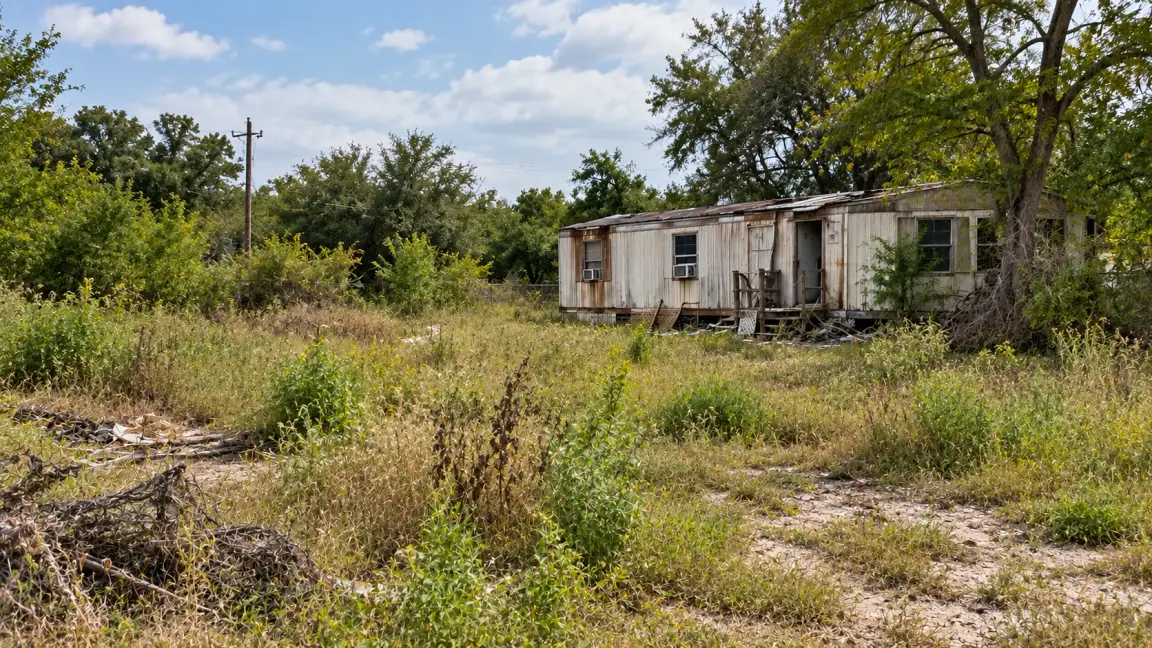

Owning vacant land can make sense when you have a plan for it.
When you don’t, the property can gradually turn into something you pay for, maintain, and think about without getting much value from.
Maybe you inherited a Houston lot you never wanted. Perhaps you bought land years ago with plans to build and those plans changed. Or maybe you’re simply tired of paying property taxes on a parcel you don’t use.
Whatever brought you here, unwanted land doesn’t automatically mean you need to sell tomorrow.
You have options.
Quick answer: What can you do with unwanted vacant land in Houston? Depending on the property and your goals, you could keep it as a long-term investment, find a practical use for it, lease it, sell or transfer it to an adjoining owner, donate it, improve it before selling, list it with a land broker, sell it yourself, or sell directly to a land buyer. Before deciding, compare the property’s potential value with its carrying costs, condition, restrictions, and the amount of time and effort you’re willing to invest.
Here are nine options worth considering.
1. Keep the Land—But Give Yourself a Reason
Selling isn’t your only option.
If the property still fits your long-term financial plans, keeping it may make sense.
The important distinction is between holding intentionally and simply continuing to own the property because you haven’t decided what else to do.
Ask yourself:
- Why am I keeping this land?
- Do I expect to use it?
- Do I have a realistic development plan?
- Do I believe holding it fits my investment strategy?
- How long am I prepared to keep it?
- What will it cost me during that period?
Then calculate your approximate annual carrying cost.
Property taxes + maintenance + insurance + association costs + financing + other recurring expenses = estimated annual holding cost
If the property costs $2,500 a year to own and you expect to keep it another five years, that’s roughly $12,500 in additional carrying costs before accounting for changes in taxes, unexpected expenses, or the time value of money.
That doesn’t mean selling is automatically better.
It means keeping the property has a cost, too.
If your property is in Harris County, you can research appraisal and property information through the Harris Central Appraisal District property search.
Once you know what you’re paying to hold the property, you can make a more deliberate decision about whether keeping it still makes sense.
2. Find a Practical Use for the Property
Before selling, consider whether the land could serve a purpose you haven’t explored.
Depending on the property, its location, restrictions, and applicable regulations, possible uses might include:
- Building in the future
- Recreational use
- Agricultural use
- Additional yard or buffer space
- Storage, where legally permitted
- Holding for future development
- Combining it with another parcel
- Another permitted use appropriate to the property
The key phrase is where permitted.
Houston is known for not having traditional citywide zoning, but that doesn’t mean every parcel can be used for anything.
The City of Houston Planning & Development Department explains that development is still affected by subdivision and platting requirements, building lines, access, parking, and other ordinances.
Private deed restrictions, easements, floodplain requirements, utility availability, and other property-specific constraints may matter as well.
Before investing money into a new use, verify that the idea is realistic for the actual parcel.
If the property has a practical use that creates value for you, it may no longer feel unwanted.
If every potential use requires more time, money, or involvement than you’re willing to commit, selling becomes a more logical option to investigate.
3. Lease the Land Instead of Selling It
Some owners don’t want to use their land themselves but aren’t ready to sell.
Depending on the parcel and local requirements, leasing could potentially create income while allowing you to retain ownership.
Possible uses will vary significantly by location and property.
Before considering a lease, investigate:
- Whether the proposed use is permitted
- Deed restrictions
- Access
- Insurance
- Liability
- Utilities
- Maintenance responsibility
- Property taxes
- Lease duration
- Improvements a tenant may make
- What happens when the lease ends
A lease only makes sense if there is actual demand for the property and the economics justify the additional responsibilities.
Run the numbers.
Expected rental income − taxes − maintenance − insurance − management/legal costs − other expenses = estimated net income
Then compare that potential income with what you could receive from selling.
If the property can generate meaningful income and you’re comfortable remaining the owner, leasing may be worth exploring.
If finding and managing a tenant creates another problem you don’t want, it probably doesn’t solve the reason you consider the land unwanted in the first place.
4. See Whether an Adjoining Property Owner Wants It
Sometimes the most logical buyer is already next door.
A neighboring owner may value your parcel because it could potentially provide:
- Additional yard space
- Privacy
- Additional frontage
- Access
- Expansion opportunities
- Space for future improvements
- Control over adjacent land
This can be especially relevant for smaller lots or parcels that have more value when combined with neighboring property.
But don’t assume the neighbor will automatically pay a premium.
Before approaching an adjoining owner, try to understand:
- What your parcel may reasonably be worth
- Whether combining the parcels would provide additional utility
- Whether the property has independent marketability
- Whether access or restrictions affect its usefulness
- What transaction costs would be involved
If you reach an agreement, use appropriate title and closing procedures rather than treating the transaction like an informal transfer simply because you know the buyer.
And if you have several adjoining property owners, consider whether speaking with more than one could give you better information about demand.
5. Donate or Transfer the Land
Some landowners aren’t primarily interested in maximizing sale proceeds.
They simply want to stop owning the property.
Depending on the circumstances, you might explore donating the land to a qualified charitable organization or transferring it to another willing party.
This isn’t as simple as signing over the deed.
Before considering a donation or transfer, determine:
- Whether the recipient actually wants the property
- Whether the organization accepts real estate
- Whether liens or unpaid taxes exist
- Whether environmental or title issues are present
- What transfer and closing costs apply
- Whether there are potential tax consequences
Don’t assume donating land automatically creates a particular tax deduction.
Tax treatment depends on the transaction and your circumstances. If the potential tax consequences matter to your decision, speak with a qualified tax professional before transferring the property.
This option tends to make the most sense when your primary objective is eliminating the responsibility of ownership rather than maximizing proceeds.
6. Improve the Property Before Selling
Another option is to make the land easier for a future buyer to understand or use.
Depending on the parcel, that might mean:
- Removing trash
- Clearing excessive vegetation
- Obtaining a survey
- Resolving title problems
- Confirming legal access
- Researching utilities
- Addressing property boundaries
- Gathering deed restrictions
- Researching development requirements
But be careful.
Landowners sometimes spend money on improvements because they assume every improvement will produce a higher sale price.
That’s not necessarily true.
Before spending $5,000 clearing a property, ask whether buyers are likely to pay at least $5,000 more because you did it.
Think in terms of return:
Expected increase in net proceeds − improvement cost = potential financial benefit
If that number isn’t convincingly positive, the improvement may not be worth doing.
Flood and drainage conditions are another area where research can matter. FEMA provides official flood-hazard information through its Flood Map Service Center.
A direct land buyer may also be willing to evaluate property in its existing condition, which can eliminate the need for certain improvements.
If you’re unsure what information or preparation is actually useful before selling, start with our guide to the questions to ask before selling vacant land in Houston.
7. List the Property With a Land Broker or Real Estate Agent
If your priority is exposing the property to a larger pool of buyers, a traditional listing may make sense.
A land broker or real estate agent can potentially help with:
- Pricing
- Marketing
- Buyer inquiries
- Property information
- Negotiations
- Contracts
- Transaction coordination
The key is finding someone with actual land experience.
Selling vacant acreage or an undeveloped lot isn’t necessarily the same as selling a house.
Ask prospective agents:
- How much vacant land have you sold?
- What similar parcels have you represented?
- How would you price my property?
- Who is the likely buyer?
- How will you market it?
- What commission or fees will I pay?
- What additional seller costs should I expect?
- How long do you think the sale could take?
Traditional listing can be appropriate when maximizing market exposure is more important than speed or simplicity.
Just compare the potential sale price with the full economics of the transaction.
A useful formula is:
Sale price − commission − seller closing costs − concessions − carrying costs − other expenses = estimated net proceeds
The highest sale price doesn’t always create the highest net proceeds.
1800LOTS provides a side-by-side overview of different options for selling vacant land that you can use when comparing a traditional listing with a direct sale.
8. Sell the Land Yourself
You don’t necessarily need a real estate agent or direct land buyer.
You can market the property yourself.
A for-sale-by-owner approach may appeal to owners who want more control over:
- Asking price
- Marketing
- Buyer communication
- Negotiation
- Timing
But that control comes with additional responsibility.
You’ll need to decide:
- How to price the property
- Where to advertise
- What information buyers need
- How to qualify potential buyers
- How to evaluate offers
- How to handle purchase agreements
- How to coordinate title and closing
Land can also require more buyer education than a typical house.
Potential buyers may ask about access, utilities, surveys, easements, flood conditions, deed restrictions, taxes, subdivision possibilities, and development requirements.
If you’re comfortable managing those questions and aren’t under time pressure, selling the property yourself may be a viable option.
If you find yourself spending months answering inquiries from buyers who never close, reconsider whether the time savings from another selling method would be worth the trade-off.
9. Sell Directly to a Cash Land Buyer
The final option is selling directly to a company or investor that purchases land.
This route is different from listing.
Instead of marketing the property broadly and waiting for buyers to make offers, you provide information about the parcel to a direct buyer, who evaluates it and decides whether to make an offer.
The potential advantages can include:
- No traditional listing process
- No repeated buyer showings
- No need to find a retail buyer yourself
- Potentially fewer selling steps
- A negotiated closing timeline
- Ability to sell certain properties as-is
The trade-off is that a direct buyer generally needs the purchase to make economic sense for its business.
That means a cash offer may be below the price you hope to achieve through broader market exposure.
The right comparison isn’t:
Cash offer vs. ideal asking price
It’s:
Direct-sale net proceeds + convenience + timeline vs. traditional-sale net proceeds + effort + timeline
1800LOTS is a Houston-based direct land buyer. According to its current FAQ, the company doesn’t charge sellers commissions or fees and covers its closing costs in direct purchases.
You can also review how 1800LOTS buys land in Houston before deciding whether you want an offer.
Which Option Is Best for Unwanted Vacant Land?
There isn’t one option that’s best for every property owner.
Start with what you actually want from the land.
| Your Priority | Option Worth Exploring |
|---|---|
| Keep long-term upside | Continue holding |
| Get some current use from the property | Find a practical use |
| Generate income without selling | Explore leasing |
| Simple local transaction | Approach adjoining owners |
| Dispose of property without prioritizing proceeds | Explore donation/transfer |
| Improve marketability | Selective property improvements |
| Maximum market exposure | List with a land professional |
| Control the sale yourself | FSBO |
| Simpler direct transaction | Cash land buyer |
You can also investigate more than one option at the same time.
For example, you might speak with a land broker about a potential listing price while requesting a direct cash offer.
That gives you actual numbers to compare instead of trying to make the decision from assumptions.
How Do I Decide Whether to Keep or Sell Unwanted Houston Land?
Use four questions.
1. What does the property cost me every year?
Calculate taxes, maintenance, association costs, insurance, financing, and other recurring expenses.
2. Do I have a realistic future use for it?
“Maybe someday” isn’t necessarily a plan.
Identify what you’re likely to do with the property and when.
3. What could I realistically receive if I sold?
Research the property and selling options instead of relying on a tax appraisal or online estimate alone.
4. What would I do with the proceeds?
Selling becomes more compelling when the money has a more useful purpose elsewhere.
The decision can then be framed as:
Value of keeping the property − future carrying costs
versus
Net proceeds from selling + value of eliminating future responsibility
Neither side automatically wins.
The calculation simply forces you to compare the real alternatives.
What If I Inherited Land I Don’t Want?
Inherited vacant land is a common reason an owner may have no emotional or practical reason to keep a property.
Before trying to sell or transfer it, determine:
- Who currently owns the property
- Whether probate is required
- Whether multiple heirs have ownership interests
- Whether taxes are current
- Whether liens exist
- Whether the title is clear
- Whether any family member wants to keep it
If several people inherited the land, establish who has authority to make decisions before negotiating a sale.
Don’t wait until you’ve accepted an offer to discover that another owner needs to sign.
What If My Unwanted Land Has Back Taxes or Title Problems?
Don’t assume a complication makes the land impossible to sell.
Start by identifying the problem.
Possible issues include:
- Delinquent property taxes
- Old liens
- Probate
- Multiple heirs
- Judgments
- Ownership discrepancies
- Missing documents
- Errors in the legal description
Some issues can be resolved through the title and closing process. Others may require additional documentation or professional assistance.
Tell prospective buyers about known issues early.
A buyer can evaluate a problem much more effectively when they know about it before the transaction reaches closing.
1800LOTS states that it works with certain properties involving title challenges and back taxes. Its Houston land-selling information explains more about its direct-sale process.
What If I Don’t Know What My Houston Land Is Worth?
Don’t let uncertainty about value force you into either keeping or selling.
Research it.
Start with:
- Comparable land sales
- Location
- Acreage
- Parcel dimensions
- Access
- Utilities
- Flood characteristics
- Restrictions
- Development potential
- Current buyer demand
For Harris County property, the Harris Central Appraisal District can help you identify appraisal and property information.
But don’t treat the appraisal-district value as an automatic sale price.
A tax appraisal, potential retail sale price, and direct cash offer are different numbers created for different purposes.
You can also get more than one opinion or offer before deciding.
How Should I Compare Selling Options?
Don’t compare only the headline prices.
Compare what each option is likely to leave you with after the transaction.
| Factor | Traditional Listing | FSBO | Direct Cash Sale |
|---|---|---|---|
| Market exposure | Broad | Depends on your marketing | Limited |
| Seller involvement | Moderate | High | Generally lower |
| Agent commission | Depends on agreement | None | Typically none |
| Marketing responsibility | Agent/seller | Seller | Buyer |
| Buyer financing | May be involved | May be involved | Often not |
| Closing timeline | Market-dependent | Market-dependent | Negotiated |
| Preparation | May help marketability | Seller decides | Often limited |
| Net proceeds | Depends on sale/costs | Depends on sale/costs | Depends on offer/terms |
The best option depends on what you value most.
If your priority is maximizing exposure, listing may deserve serious consideration.
If your priority is controlling every aspect of the sale, FSBO may fit.
If you want to reduce the amount of work involved, a direct sale may be worth comparing.
Frequently Asked Questions About Unwanted Vacant Land in Houston
What should I do with unwanted land in Houston?
Start by determining why you no longer want the property and what it costs to keep. Your options may include holding it, finding another use, leasing it, selling to a neighbor, donating or transferring it, improving it, listing with an agent, selling it yourself, or selling directly to a land buyer.
Should I keep vacant land I’m not using?
Keeping it can make sense if you have a realistic future use or investment reason and are comfortable with the carrying costs. If you’re paying taxes and maintenance indefinitely without a clear purpose, selling may deserve consideration.
Can I sell unwanted land without making improvements?
Potentially. Whether improvements are worthwhile depends on your selling strategy and the buyer. Direct land buyers may evaluate properties in their existing condition, while certain improvements may help when marketing to retail buyers.
Can I sell unwanted land with back taxes?
Potentially. Outstanding property taxes can affect your proceeds and may need to be addressed through the transaction. The specific options depend on the property and title situation.
Can I sell inherited land I don’t want?
Potentially, once the appropriate ownership and estate requirements are addressed. If several heirs have an interest, determine who must approve and sign the transaction before accepting an offer.
Is donating unwanted land better than selling it?
That depends on your priorities, the property’s value, the recipient, and potential tax implications. Donation may appeal to someone who primarily wants to transfer ownership, while selling may make more sense when recovering value from the property is important.
Should I sell unwanted land to my neighbor?
A neighboring owner can be a logical potential buyer, particularly when the parcel provides additional space, access, frontage, or another benefit. Research the property’s value and use proper transaction and title procedures even when selling to someone you know.
How do I sell unwanted vacant land in Houston?
You can list with a land broker or real estate agent, market it yourself, approach potential buyers such as neighboring owners, or request an offer from a direct land buyer. Compare expected net proceeds, costs, timeline, and effort before choosing.
Do I need an agent to sell vacant land?
No. An owner can potentially sell directly to another party without a real estate agent. However, an experienced land professional may provide valuable marketing, pricing, and transaction assistance when broader market exposure is your priority.
Unwanted Land Doesn’t Mean You Have to Make a Rushed Decision
If you’re tired of owning a vacant property, selling may ultimately be the right choice.
But first figure out what you’re trying to solve.
Are you tired of paying taxes?
Do you live too far away?
Did your plans change?
Are you dealing with inherited property?
Do you simply have a better use for the money?
Once you know why the land feels unwanted, it’s much easier to identify the right option.
You may decide to keep it.
You may lease it.
You may list it.
You may sell it yourself.
Or you may decide that a direct sale gives you the simplicity you’re looking for.
If you’d like to include a direct sale in your comparison, review the 1800LOTS Houston land-buying process or request a no-obligation cash offer for your property.
1800LOTS buys vacant and undeveloped land directly from Houston-area owners. The company’s published process says sellers can review an offer without an obligation to accept it.
An offer doesn’t decide what you should do with the land.
It gives you another real option to compare.