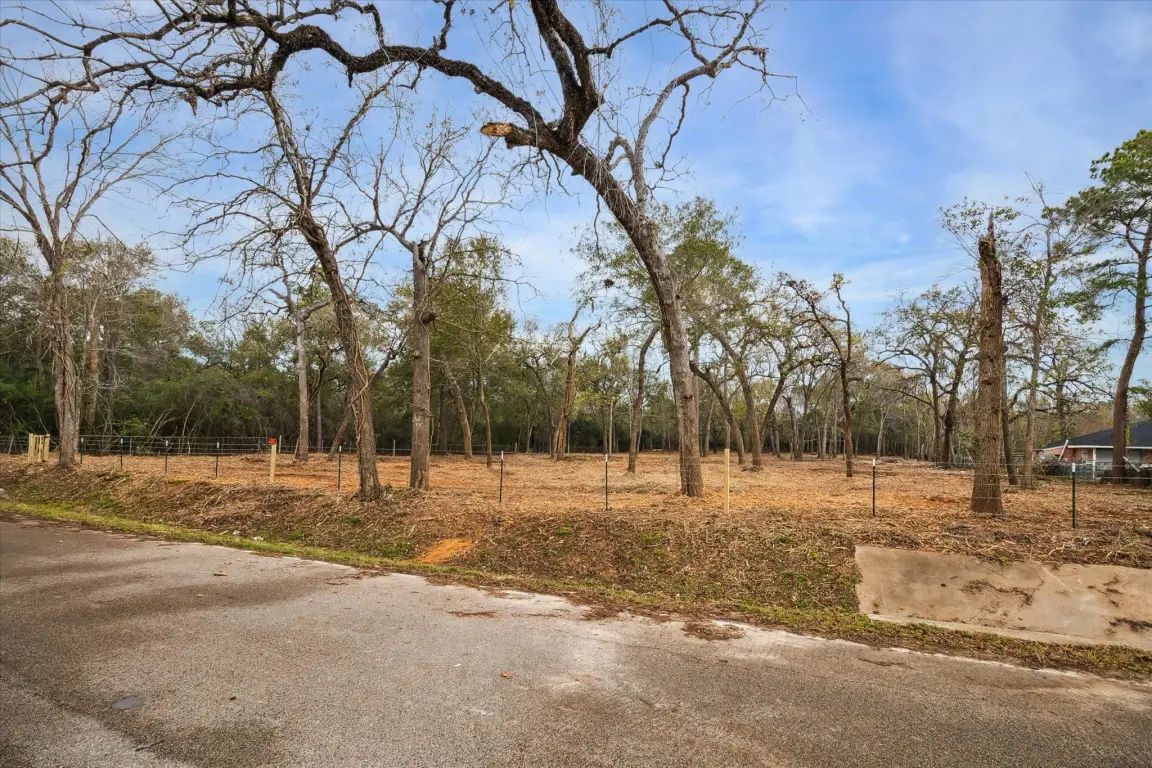

Not every inheritance feels like a windfall. Sometimes you inherit land you never asked for, don’t plan to use, and aren’t sure why your family owned in the first place.
Maybe it’s a vacant lot on the other side of Houston. Maybe it’s acreage your parents bought decades ago. Maybe you live in another state. Or maybe you inherited the property with siblings, and nobody really wants to be responsible for it.
Meanwhile, there may be property taxes, maintenance, paperwork, title questions, and family decisions that still need attention.
If that sounds familiar, you’re probably asking:
What if I inherited land in Houston that I don’t want?
You don’t have to keep unwanted inherited land forever. Depending on the property and ownership situation, you may be able to let another heir keep it, arrange a family buyout, sell to a neighbor, list the land, sell it yourself, sell directly to a land buyer, or explore another appropriate transfer. Before doing anything, confirm who owns the property and whether estate, title, tax, or lien issues need to be addressed.
The important thing is not to let a property you don’t want become a property you ignore.
Here are eight practical options to consider.
First, Don’t Ignore the Land Just Because You Don’t Want It
When someone inherits property they never wanted, doing nothing can feel like the easiest option.
It usually isn’t a long-term solution.
Depending on the property, ownership can continue to involve things such as:
- Property taxes
- Maintenance
- Mowing or vegetation
- HOA or association obligations
- Notices and correspondence
- Liability concerns
- Family disagreements
- Title issues
- Other ownership expenses
And before you can transfer or sell the property, you need to know who actually owns it.
That can be straightforward.
Or it can involve an estate, multiple heirs, a deceased owner remaining in the title history, or other ownership questions.
If you’re unsure who inherited the property or who has authority to transfer it, don’t guess. The Texas Judicial Branch provides probate-related court resources and forms, and an appropriate Texas probate or real estate attorney can advise you about a specific estate.
You don’t have to decide today whether you’re keeping or selling.
But you should understand what you’ve inherited.
1. Give Yourself a Short Window to Figure It Out
Not wanting the land today doesn’t mean you need to sign the first offer tomorrow.
Sometimes the smartest immediate move is simply to give yourself a defined amount of time to investigate.
Not five years.
Maybe 30, 60, or 90 days.
Use that period to answer the questions that actually matter:
- Who owns the property?
- Are there other heirs?
- What does it cost to keep?
- Are taxes current?
- Are there liens?
- Where exactly is it?
- Does it have access?
- What might it be worth?
- Does anyone in the family want it?
- What selling options are available?
This is different from procrastinating.
You’re intentionally gathering enough information to make a decision.
For property in Harris County, the Harris Central Appraisal District property search can help you locate basic appraisal and property information.
Then set yourself a decision date.
By that date, you should have enough information to decide whether the land deserves a place in your life.
If the answer is still no, move to the next option.
2. See Whether Another Heir Wants It
You may not want the property.
Someone else in the family might.
This can be especially useful when several siblings or relatives inherited interests in the same parcel.
Suppose three siblings inherit vacant land.
Two want nothing to do with it.
The third lives nearby and would like to keep it.
The family may be able to explore an arrangement where that person acquires the others’ interests.
Before agreeing to anything, establish:
- Who owns what
- Whether everyone agrees
- What the land may reasonably be worth
- Whether taxes or liens are outstanding
- How the transfer will be documented
- Whether financing is necessary
- What transaction costs may apply
- Whether there are tax consequences
If money is changing hands, don’t pick a number simply because it keeps the conversation easy.
An independent valuation may be useful, particularly if the property is valuable or family members have different expectations.
A family solution can be simpler than selling to a stranger.
It should still be handled like a real property transaction.
3. Ask an Adjoining Owner If They Want the Property
If nobody in your family wants the land, look next door.
An adjoining property owner may have a reason to want the parcel that isn’t obvious to the broader market.
Your land could potentially give a neighbor:
- More yard or acreage
- Additional privacy
- Better access
- More road frontage
- Room for expansion
- Control over adjacent property
- Future development opportunities
That doesn’t mean the neighbor will automatically pay a premium.
It means they may be a logical potential buyer.
Before approaching anyone, understand the property well enough to have an informed conversation about value.
If the land touches several parcels, you may have more than one potential adjoining buyer.
And if someone agrees to purchase it, don’t treat the transaction casually just because you know them.
Use appropriate contracts and title/closing procedures.
A friendly buyer doesn’t eliminate ownership or title requirements.
4. Explore Whether Donating or Transferring It Makes Sense
Some owners aren’t primarily interested in maximizing proceeds.
They simply want to stop owning the property.
Depending on the land and circumstances, you might explore whether an appropriate charitable organization or another party is willing to accept it.
But don’t assume you can simply sign the land over to any organization you choose.
The recipient has to want it.
Before considering a donation or other transfer, investigate:
- Whether the recipient accepts real estate
- Property taxes
- Liens
- Environmental concerns
- Title condition
- Transfer expenses
- Property restrictions
- Potential tax consequences
And don’t assume that donating land automatically creates a particular tax deduction.
The tax treatment depends on the transaction and applicable rules.
If charitable donation is something you’re seriously considering, speak with the organization and an appropriate tax professional before transferring the property.
This option makes the most sense when getting rid of the ownership responsibility matters more to you than receiving sale proceeds.
5. List the Land for Sale
If you want to sell and your priority is exposing the property to a broad pool of potential buyers, consider listing it.
A real estate agent or land broker may help with:
- Pricing
- Marketing
- Buyer inquiries
- Negotiation
- Contracts
- Transaction coordination
Try to find someone who actually works with vacant land.
Land isn’t just a house without a building.
Buyers may care about access, utilities, frontage, easements, restrictions, flood conditions, parcel dimensions, development potential, and other issues that don’t arise in the same way with a typical home.
Ask prospective agents:
- What similar land have you sold?
- How would you determine the listing price?
- Who is the likely buyer?
- Where will you market the property?
- What commission will I pay?
- What other seller costs might apply?
- Do you recommend any work before listing?
- How will you handle an inherited-property situation?
Then compare expected net proceeds, not just the proposed asking price.
A basic framework is:
Expected sale price − commission − seller closing costs − concessions − additional carrying costs = estimated net proceeds
If you’re comparing a traditional listing with other routes, review the 1800LOTS guide to options for selling vacant land.
6. Sell the Inherited Land Yourself
You don’t have to hire an agent.
If you have the time and want more control, you can market the property yourself.
That gives you control over:
- Asking price
- Advertising
- Buyer communication
- Negotiation
- Timing
It also means you do more of the work.
You may need to answer questions about:
- Access
- Utilities
- Surveys
- Flood characteristics
- Easements
- Restrictions
- Taxes
- Potential uses
- Title
- Closing
You’ll also need to decide where to advertise, how to evaluate prospective buyers, and how to negotiate an offer.
For some owners, that’s manageable.
For someone who inherited land precisely because they don’t want another property to deal with, FSBO can turn an unwanted asset into an unwanted part-time job.
Be realistic about how much involvement you want.
7. Sell Directly to a Land Buyer
If your main goal is to stop owning the property without managing a traditional listing, a direct sale may be worth comparing.
Instead of marketing the land to the broader market, you provide the property information directly to a buyer who purchases land.
The buyer researches the parcel and, if interested, makes an offer.
This approach can appeal to owners who:
- Never wanted the property
- Live outside Houston
- Don’t want to prepare the land for sale
- Don’t want to manage advertising
- Don’t want to field buyer inquiries
- Are tired of paying taxes or maintenance
- Prefer a more direct process
But convenience has economic value.
A direct land buyer generally needs to account for transaction expenses, holding costs, risk, future disposition costs, and a business margin.
So don’t assume a direct offer will match the highest theoretical price you might achieve after fully marketing the property.
Instead, compare:
Direct-sale net proceeds + timeline + convenience + certainty
with:
Traditional-sale net proceeds + market exposure + time + costs + seller effort
Neither automatically wins.
Your priorities determine which trade-off makes sense.
1800LOTS purchases vacant and undeveloped property directly in the Houston area, including inherited land. You can review how 1800LOTS buys Houston land or read the 1800LOTS FAQ before deciding whether requesting an offer belongs in your comparison.
8. Keep It—But Only If Your Mind Actually Changes
There’s one option people sometimes overlook:
After doing the research, you may decide the land isn’t as unwanted as you thought.
Maybe the taxes are minimal.
Maybe another family member wants to use it.
Maybe you discover the parcel has practical development potential.
Maybe the property fits your long-term investment goals.
That’s fine.
Changing your mind isn’t failing to make a decision.
It’s making a better-informed one.
But there should be a reason behind it.
Ask:
If I had cash equal to the property’s current value instead of the land, would I choose to buy this parcel today?
If the answer is yes, keeping it deserves serious consideration.
If the answer is still no, don’t let inertia become your investment strategy.
Which Option Makes Sense If You Don’t Want the Land?
Start with what you actually want from the situation.
| Your Priority | Option to Explore |
|---|---|
| Need time to understand what you inherited | Short evaluation period |
| Another heir wants the property | Heir buyout or transfer |
| Neighbor may have a special use for it | Adjoining-owner sale |
| Proceeds aren’t your main priority | Explore donation/transfer |
| Want broad buyer exposure | Traditional listing |
| Want full control over the sale | FSBO |
| Want less marketing and seller involvement | Direct land buyer |
| Research changes your view of the property | Keep it intentionally |
Notice what’s missing from the table:
“Best option.”
There isn’t one.
A traditional listing may make sense for someone willing to spend time pursuing broader market exposure.
A direct sale may make more sense for someone who values simplicity.
A family buyout may be the cleanest solution when another heir genuinely wants the property.
Your goal is to find the option that solves your reason for not wanting the land.
Why Don’t You Want the Property?
This is one of the most useful questions you can ask.
Because “I don’t want this land” can mean very different things.
“I don’t want to keep paying for it.”
Calculate the real annual cost:
Property taxes + maintenance + insurance + association costs + other recurring expenses = annual holding cost
Then compare that amount with your expected benefit from continuing to own the property.
“I live too far away.”
Your problem may be management rather than the land itself.
Consider whether a local arrangement, lease, family transfer, or sale solves that problem.
“Nobody in the family will use it.”
Then sentimental ownership may be the only thing keeping the property in the family.
That’s worth recognizing explicitly.
“I inherited it with other people.”
Your real problem may be shared ownership.
An heir buyout or coordinated sale may deserve more attention than simply deciding whether the land itself is good or bad.
“I could use the money somewhere else.”
Then compare what you expect to gain by keeping the property with what the net proceeds could do elsewhere.
Once you understand why you don’t want the land, choosing an option becomes easier.
How Much Is Unwanted Inherited Land in Houston Worth?
The fact that you don’t want a property doesn’t mean it has little value.
And the fact that you inherited it doesn’t tell you what it’s worth.
Value can depend on:
- Location
- Acreage
- Parcel dimensions
- Road frontage
- Legal access
- Utilities
- Comparable sales
- Flood characteristics
- Easements
- Deed restrictions
- Development potential
- Surrounding development
- Buyer demand
Start with property records and comparable land information.
For Harris County property, HCAD’s property search can help you identify appraisal and property information.
But don’t treat the appraisal-district value as a guaranteed sale price.
A tax appraisal, broker opinion, formal appraisal, listing price, direct cash offer, and final sale price can all be different.
If the property is particularly valuable, unusual, disputed among heirs, or involved in an estate where valuation matters, consider whether an independent appraisal is appropriate.
What If You Inherited the Land With Siblings?
Shared inheritance can turn a property question into a family question.
Before deciding what to do, establish:
- Who owns the land
- Each person’s ownership interest
- Whether the estate is still involved
- Whether everyone agrees about what should happen
- Who has been paying expenses
- Whether anyone wants to keep the property
Suppose four siblings inherit land.
Three want to sell.
One wants to keep it.
Don’t assume the preference of the majority automatically determines what can happen to the entire property.
Ownership rights and legal authority matter.
A buyout may solve the disagreement.
Other options may exist depending on how title is held and the circumstances.
If there’s uncertainty or conflict, this is a situation where advice from a qualified Texas attorney may be worthwhile.
What If the Land Has Back Taxes or Title Problems?
An unwanted property can feel even more unwanted when you discover a tax or title problem.
Don’t assume that means you’re stuck with it forever.
Potential issues may include:
- Delinquent property taxes
- Liens
- Multiple heirs
- A deceased owner in the title history
- Missing estate documents
- Judgments
- Ownership discrepancies
- Unreleased interests
- Legal-description problems
The important thing is identifying the issue.
Depending on the problem, it may be addressed before or as part of a transaction.
If you already know something is wrong, tell prospective buyers and the appropriate title or legal professionals early.
For a step-by-step look at what happens once you’ve decided to sell, read 9 Steps to Selling Inherited Land in Houston.
What About Taxes If You Sell Inherited Land?
Selling inherited property can have tax consequences.
One concept to understand is basis.
Inherited property is generally subject to special federal basis rules rather than simply using whatever the deceased owner originally paid for the property.
The IRS discusses inherited-property basis in Publication 551.
Basis matters because it can affect the calculation of gain or loss when you sell.
A simplified conceptual framework is:
Sale price − adjusted basis − applicable selling expenses = potential gain or loss
That’s intentionally simplified.
The actual tax treatment can depend on the estate, valuation, improvements, expenses, and other circumstances.
So don’t assume:
“My parents paid $10,000 and I’m selling for $80,000, therefore I automatically have a $70,000 taxable gain.”
And don’t assume there will be no tax consequence either.
If the numbers are significant, speak with a qualified tax professional before completing the transaction.
Should You Spend Money Fixing Up Land You Don’t Want?
Be careful here.
Once someone decides to sell, there’s a natural urge to “get the property ready.”
With vacant land, that can turn into spending money on:
- Brush clearing
- Tree removal
- Debris removal
- Surveys
- Fencing
- Access improvements
- Other site work
Some improvements may help.
Others may simply reduce what you walk away with.
Before spending money, ask:
Expected increase in net proceeds − cost of improvement = likely financial benefit
If clearing the property costs $6,000 but only adds an estimated $3,000 to what a buyer will pay, you’ve improved the land while making your own outcome worse.
Ask prospective agents or buyers what they actually need before doing expensive work.
Can You Sell Unwanted Inherited Land If You Live Outside Texas?
Potentially, yes.
Living in another state doesn’t automatically prevent you from selling land in Houston.
In fact, distance is one of the reasons inherited land becomes unwanted in the first place.
You may be dealing with property taxes, maintenance, mail, contractors, and other responsibilities for land hundreds or thousands of miles away.
If you’re exploring a sale, ask:
- Can documents be signed remotely?
- Will anything require notarization?
- Do I need to visit the property?
- How are title issues handled?
- Who coordinates closing?
- How are proceeds delivered?
Your distance from Houston may influence which selling method feels practical.
It doesn’t necessarily prevent you from selling.
Is It Better to Keep or Sell Unwanted Inherited Land?
Try comparing the two decisions rather than asking which one is universally better.
Keeping
Consider:
- Future potential
- Personal or family use
- Sentimental value
- Annual carrying costs
- Management responsibility
- Opportunity cost
Selling
Consider:
- Expected net proceeds
- Selling expenses
- Potential tax consequences
- Timeline
- Effort
- What you’ll do with the proceeds
- Value of eliminating future responsibility
A useful conceptual comparison is:
Expected future benefit of keeping − future ownership costs and responsibilities
versus:
Expected net sale proceeds + value of eliminating future obligations + alternative use of the money
You won’t know every future number.
The framework simply forces both choices to compete on more than emotion.
Frequently Asked Questions About Unwanted Inherited Land in Houston
What should I do if I inherit land in Houston that I don’t want?
First confirm ownership and identify any estate, title, lien, or tax issues. Then compare your options, which may include transferring your interest to another heir, arranging a buyout, approaching a neighboring owner, exploring a donation or other transfer, listing the land, selling it yourself, or requesting a direct offer.
Do I have to keep land that I inherited?
Not necessarily. Depending on the ownership and estate situation, you may have options for transferring or selling the property. Don’t simply ignore the land; determine what you own and what obligations are attached to it.
Can another heir take my share of inherited land?
Potentially, an heir may be able to acquire another owner’s interest through an appropriately structured transaction. Establish ownership, value, and the legal and tax implications before transferring an interest.
Can I sell inherited land if other heirs are involved?
Potentially, but first determine who owns the property and who must participate in the transaction. If the owners disagree or authority is unclear, legal guidance may be necessary.
Can I sell unwanted inherited land with back taxes?
Potentially. Outstanding property taxes may need to be addressed through the transaction and can reduce net proceeds. Identify what is owed before comparing offers.
Do I have to clean inherited land before selling it?
Not necessarily. Some buyers may purchase vacant land in its current condition. Determine whether cleanup is actually required or likely to improve your net proceeds before spending money.
Can I sell inherited Houston land if I live in another state?
Potentially, yes. Ask the professionals handling the transaction what remote signing, notarization, title, and closing requirements apply.
Should I list unwanted inherited land or sell directly?
That depends on your priorities. Listing can provide broader market exposure, while a direct sale can reduce traditional marketing and seller involvement. Compare expected net proceeds, costs, contingencies, timeline, and effort.
Is there a tax penalty for selling inherited land?
Selling inherited property can have tax consequences, but there isn’t one universal “penalty” that applies to every sale. Basis and other facts affect the calculation. Consult an appropriate tax professional when the financial impact is significant.
Can I request an offer even if I’m not sure I want to sell?
Yes. 1800LOTS states that requesting an offer doesn’t obligate you to sell. An offer can simply give you a concrete direct-sale option to compare with keeping, listing, or another transfer.
You Don’t Have to Keep Land Just Because Someone Left It to You
Inheritance can create a strange sense of obligation.
Someone you cared about owned the property.
Now it’s yours.
That can make selling feel more complicated than an ordinary financial decision.
But keeping land you don’t want doesn’t necessarily preserve what mattered about the person who left it to you.
Sometimes the property fits your life.
Sometimes it doesn’t.
If you inherited Houston land you don’t want, start by understanding the situation rather than rushing to get rid of it.
Find out who owns it.
Learn what it costs.
Understand what it may be worth.
Ask whether anyone else in the family wants it.
Then compare the practical ways to move forward.
If selling is where you land, read 9 Steps to Selling Inherited Land in Houston and compare the different options for selling land.
If you’d like a direct-sale number to include in that comparison, review how 1800LOTS buys Houston land or request a no-obligation offer.
You don’t have to accept it.
Sometimes knowing what one real option looks like is enough to make the rest of the decision easier.
This article provides general educational information and isn’t legal, tax, or financial advice. Inheritance, probate, ownership, title, and tax consequences depend on the specific estate and property.