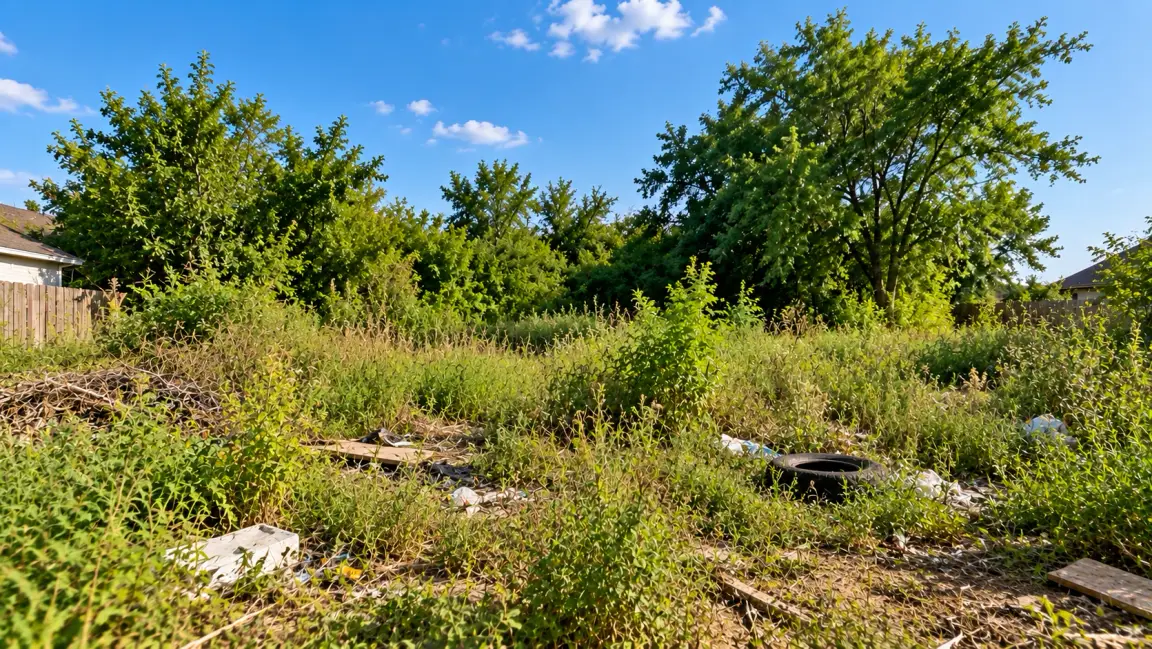

If you’ve requested a cash offer for your Houston land, you may be wondering what happens between submitting your property information and receiving a number.
How does a land buyer decide what to offer?
There isn’t one universal formula.
Cash buyers may look at comparable land sales, location, parcel size, access, utilities, development potential, flood considerations, title issues, market demand, and the costs and risks associated with owning or reselling the property.
The result is an offer based on the characteristics and economics of that particular parcel—not simply its acreage or tax value.
Quick answer: How do cash buyers determine offers for land in Houston? A buyer may start with comparable sales and then evaluate the parcel’s location, size, access, utilities, development potential, flood considerations, title condition, market demand, and expected transaction or holding costs. Different buyers can value those factors differently, which is why two legitimate cash offers for the same Houston property may not be identical.
Here are eight of the most important factors that can influence how a cash land buyer evaluates a Houston property.
1. Recent Sales of Comparable Land
One of the first places a buyer may start is with other land that has sold in the area.
But land comparables—or “comps”—aren’t always as straightforward as they sound.
If someone is evaluating a house in a subdivision, there may be several nearby homes with similar square footage, age, construction, and features.
Land is different.
Two parcels on the same road could have very different characteristics.
A useful comparable might account for:
- Location
- Acreage
- Parcel dimensions
- Road frontage
- Legal access
- Utility availability
- Property type
- Surrounding development
- Flood conditions
- Potential use
- Improvements
- Restrictions
That means a buyer shouldn’t simply find another parcel nearby, divide its sale price by the number of acres, and assume the same price per acre applies to your property.
Context matters.
Property owners in Harris County can also review public property information through the Harris Central Appraisal District property search. HCAD maintains appraisal records for property within Harris County.
Keep in mind that an appraisal-district value and a direct cash offer serve different purposes. A cash buyer is evaluating the economics of a specific transaction at a specific point in time.
At 1800LOTS, comparable properties and market conditions are part of our evaluation process. Our FAQ explains how we determine land offers in more detail.
2. Location and Surrounding Development
“Houston land” covers an enormous range of properties.
A vacant infill lot surrounded by established homes is very different from rural acreage farther outside the urban core.
Location can influence an offer because it affects demand and what a future buyer may be willing to do with the property.
A land buyer may consider:
- Proximity to established neighborhoods
- Nearby residential or commercial development
- Major roads and highways
- Employment centers
- Schools and amenities
- New construction
- Population and development patterns
- Adjacent property uses
- Demand from builders, developers, investors, or individual buyers
Even within the same ZIP code, land values can vary considerably.
A parcel’s surroundings help answer a fundamental question:
Who is likely to want this land, and what might they use it for?
The clearer the potential buyer pool, the easier it may be to estimate marketability.
This is one reason 1800LOTS evaluates Houston properties individually rather than applying one price-per-acre number across the entire market.
If you’re considering a direct sale, you can learn more about how we buy land in Houston.
3. Parcel Size, Shape, Frontage, and Access
Acreage matters—but acreage alone doesn’t tell the whole story.
The physical characteristics of a parcel can affect how useful it is.
Buyers may look at:
- Total acreage
- Width and depth
- Parcel shape
- Road frontage
- Legal access
- Existing driveways
- Easements
- Topography
- Whether the parcel is contiguous
- Whether portions of the land may be difficult to use
Consider two parcels that are both five acres.
One is rectangular, has substantial public-road frontage, and is easy to access.
The other is narrow, irregularly shaped, and has uncertain access.
Those properties may not have the same utility to a future owner, even though the acreage is identical.
Access can be especially important.
A parcel that appears accessible on an online map may still require additional research to understand legal access, easements, or frontage.
For that reason, serious land evaluation often goes beyond looking at an aerial image.
4. Utilities and Infrastructure
Utilities can have a major impact on how a buyer evaluates land.
Depending on the property’s location and potential use, a buyer may investigate the availability of:
- Electricity
- Public water
- Sewer
- Septic feasibility
- Natural gas
- Drainage infrastructure
- Road access
Why does this matter?
Because extending infrastructure can cost money.
A parcel with utilities readily available may present a very different development scenario from land requiring substantial infrastructure work.
But “utilities nearby” and “utilities available to the property” aren’t necessarily the same thing.
A buyer may need to determine where utility lines are located, whether connections are possible, what capacity exists, and what costs could be involved.
The same principle applies to roads and drainage.
Infrastructure affects both what can potentially be done with the property and how much it may cost to do it.
5. Development Potential and Property Restrictions
A common misconception about Houston land is that because Houston doesn’t have traditional zoning, property owners can build anything anywhere.
That’s not accurate.
The City of Houston Planning & Development Department states that Houston does not have zoning, but land development is still governed by ordinances addressing subdivision, platting, building lines, access, parking, and other development requirements.
A buyer may therefore evaluate issues such as:
- Platting
- Building lines
- Setbacks
- Access
- Deed restrictions
- Easements
- Minimum lot requirements
- Parking requirements
- Existing use limitations
- Subdivision potential
- Development approvals
Private deed restrictions can also matter even where conventional zoning doesn’t exist.
The practical question is not simply:
“What is this land?”
It’s:
“What can realistically be done with it?”
Development potential can affect demand, risk, and ultimately what a buyer is willing to pay.
For example, a parcel with characteristics that make future development relatively straightforward may attract a different valuation from a parcel requiring substantial additional work, approvals, or infrastructure.
6. Flood Risk, Drainage, and Site Conditions
Flood considerations are particularly relevant when evaluating land in the Houston area.
A buyer may research whether some or all of a parcel is within a mapped flood hazard area and whether site conditions could affect development, insurance, drainage, or future marketability.
FEMA’s official flood maps and studies provide flood-hazard information used for National Flood Insurance Program and floodplain-management purposes. Property owners can review official flood information through the FEMA Flood Map Service Center.
But a flood map isn’t the only consideration.
A buyer may also look at:
- How much of the parcel is affected
- Drainage
- Elevation
- Nearby waterways
- Detention requirements
- Wet or low-lying areas
- Potential site-preparation requirements
- Access during heavy weather
Being within a mapped flood area doesn’t automatically make land worthless.
Likewise, being outside a particular mapped flood zone doesn’t guarantee that a property will never experience flooding.
The question is how the property’s actual conditions affect its use, costs, risk, and marketability.
7. Title, Taxes, Liens, and Other Property Issues
The physical land is only part of the transaction.
The ownership and title situation matters, too.
A buyer may need to consider issues such as:
- Unpaid property taxes
- Existing liens
- Multiple owners
- Probate
- Inherited ownership
- Judgments
- HOA or association obligations
- Easements
- Ownership discrepancies
- Problems in the legal description
- Other title defects
Some issues may be relatively straightforward to resolve.
Others can require additional time, documentation, professional assistance, or expense.
That’s why a buyer may need to understand the title situation before determining whether the property can close on the expected timeline.
1800LOTS works with landowners in a variety of situations, including some properties with title complications or back taxes. You can review our land-selling process to understand what happens after you submit property information.
If you already know about a lien, inheritance issue, ownership dispute, or unpaid taxes, disclose it early.
Finding out at the beginning is usually easier than discovering it shortly before closing.
8. Marketability, Holding Costs, and Buyer Risk
Finally, a cash buyer has to consider what happens after purchasing the land.
A direct buyer isn’t simply evaluating what the parcel might eventually sell for.
The buyer may also consider the costs, time, and risk involved in owning the property.
That can include:
- Property taxes
- Maintenance
- Mowing or cleanup
- Insurance
- HOA or association expenses
- Marketing
- Professional services
- Title-related work
- Development research
- Cost of capital
- Time required to find another buyer
- Market risk
This helps explain why a direct cash offer and a potential retail asking price aren’t necessarily the same number.
A direct buyer is typically taking on some of the future costs and uncertainty in exchange for purchasing the property now.
1800LOTS explains on its land-selling FAQ that its offer process considers comparable properties, market conditions, costs associated with marketing or reselling the property, and the economics required for the transaction to work.
The seller then decides whether the offer and convenience of a direct transaction make sense.
Is There a Formula for Calculating a Cash Offer on Houston Land?
Not one universal formula.
Every buyer can have a different acquisition model, and every parcel can present a different combination of value, costs, and risk.
Conceptually, however, a direct buyer may think about the transaction something like this:
Expected property value − anticipated costs − holding/transaction costs − risk allowance − required margin = potential cash offer
That is a simplified framework—not a formula every land buyer uses.
For example, imagine a buyer believes a parcel could eventually be worth $100,000 to an end buyer.
The buyer may then need to account for:
- Due diligence
- Title and transaction expenses
- Taxes while holding the property
- Cleanup or maintenance
- Marketing
- Professional services
- Uncertainty about the resale timeline
- Business margin
The resulting cash offer could therefore be below the property’s potential future retail price.
That’s one of the trade-offs of a direct sale.
The seller may accept less market exposure in exchange for a more streamlined transaction.
Example: Why Two Houston Land Buyers May Make Different Offers
Suppose two cash buyers evaluate the same vacant Houston parcel.
Both see the same acreage.
But Buyer A believes utilities are readily accessible and expects strong demand from builders.
Buyer B believes additional infrastructure work may be required and expects the property to take longer to resell.
Their analysis might look something like this:
| Evaluation Factor | Buyer A | Buyer B |
|---|---|---|
| Comparable sales | Strong | Strong |
| Location | Favorable | Favorable |
| Access | Good | Good |
| Utilities | Lower expected cost | Higher expected cost |
| Development potential | Strong | Moderate |
| Expected holding period | Shorter | Longer |
| Perceived risk | Lower | Higher |
| Result | Higher offer | Lower offer |
Neither buyer necessarily made a mathematical mistake.
They made different assumptions.
That’s why understanding how a buyer evaluated your land can be more useful than simply asking whether an offer is “fair.”
If you’ve already received an offer, read our guide to 9 things to consider before accepting a cash offer for land in Houston.
Does the HCAD Value Determine What a Cash Buyer Will Offer?
No.
The Harris Central Appraisal District appraises property for property-tax purposes. HCAD states that it is responsible for appraising property within Harris County for tax purposes.
That makes HCAD data useful for researching a parcel, but an appraisal-district value shouldn’t automatically be treated as the price a particular buyer must offer.
A direct buyer is evaluating a specific transaction.
That evaluation may incorporate current comparable sales, property characteristics, development considerations, marketability, transaction costs, and buyer-specific assumptions.
In other words:
HCAD value ≠ guaranteed sale price ≠ guaranteed cash offer.
Each number serves a different purpose.
What Information Helps a Buyer Evaluate Your Houston Land?
The more accurately a buyer understands the property, the easier it is to evaluate.
When requesting an offer, useful information can include:
- Property address
- Assessor Parcel Number (APN)
- Approximate acreage
- Ownership information
- Known road access
- Known utilities
- Existing survey
- Known easements
- Deed restrictions
- Improvements
- Current use
- Property taxes
- Known liens
- HOA information
- Title or inheritance issues
You don’t necessarily need to have every document before contacting a buyer.
If you don’t know an answer, say so.
At 1800LOTS, the process begins with basic property information. We then review the parcel and market before presenting an offer. You can see the full 1800LOTS land-buying process here.
How Should You Evaluate the Cash Offer You Receive?
Once you receive an offer, don’t evaluate the purchase price in isolation.
Consider:
1. Purchase price
What is the buyer offering?
2. Seller costs
Will you pay commissions, closing costs, fees, or other transaction expenses?
3. Net proceeds
Approximately how much should you receive when the transaction closes?
4. Contingencies
What conditions allow the buyer to cancel or renegotiate?
5. Due diligence
How long can the buyer investigate the property before becoming obligated to close?
6. Closing timeline
When does the contract say closing will occur?
7. Buyer certainty
Does the buyer appear capable of completing the transaction?
A useful comparison is:
Offer price − seller-paid transaction costs − other seller obligations = estimated net proceeds
A higher headline offer isn’t necessarily a better transaction if it carries substantially more costs, contingencies, or execution risk.
How 1800LOTS Evaluates Houston Land
1800LOTS is a Houston-based direct land buyer.
When evaluating a property, we research the land and relevant market information rather than applying one blanket price-per-acre formula to every parcel.
Our published FAQ explains that comparable properties, market conditions, marketing requirements, and transaction economics are among the considerations used in developing an offer.
Here’s the basic process:
Step 1: Tell Us About the Property
Provide the property address or APN and basic information about your land.
Step 2: We Research the Parcel
We evaluate available property and market information to understand the land and determine whether it fits our buying criteria.
Step 3: Receive an Offer
If the property is a fit, we’ll provide a cash offer for you to review.
Step 4: Decide Whether It Works for You
There’s no obligation to accept.
Compare the offer with your other selling options, your expected net proceeds, and your priorities.
If you accept, the transaction proceeds toward closing according to the purchase agreement and title requirements.
Learn more about selling land directly to 1800LOTS before deciding whether a direct cash sale is right for you.
Frequently Asked Questions About Houston Land Cash Offers
How do cash buyers determine offers for land in Houston?
Cash buyers may evaluate comparable sales, location, acreage, access, utilities, development potential, flood considerations, title condition, market demand, expected holding costs, and the economics of reselling or using the property. Each buyer can weigh these factors differently.
Is a cash land offer based on price per acre?
Sometimes price per acre is used as a comparison metric, but it shouldn’t necessarily be the only factor. Access, utilities, parcel shape, development potential, restrictions, location, and other characteristics can cause similarly sized properties to have very different values.
Does my HCAD appraisal determine my cash offer?
No. HCAD appraises property for tax purposes. A direct cash buyer evaluates the economics of purchasing a specific property, so the buyer’s offer may differ from the appraisal-district value.
Does being in a flood zone reduce a land offer?
Flood conditions can affect how a buyer evaluates a property, but the impact depends on the parcel. A buyer may consider how much land is affected, potential uses, drainage, development requirements, marketability, and other site-specific factors.
Does Houston’s lack of zoning increase land value?
Not automatically. Houston does not have traditional citywide zoning, but development is still subject to applicable ordinances, platting and subdivision requirements, building lines, access requirements, deed restrictions, and other constraints. Value depends on the specific property.
Why is a cash offer lower than what I think my land is worth?
A direct buyer may account for transaction costs, holding costs, market risk, future marketing or development expenses, and the margin required for the transaction to make economic sense. If you believe important property characteristics were missed, ask the buyer how the offer was calculated.
Can I negotiate a cash offer for my land?
That depends on the buyer and transaction. If you have relevant information that wasn’t considered—such as a survey, utility information, access documentation, or recent comparable sales—share it and ask whether it affects the evaluation.
Do I have to accept a cash offer after requesting one?
No. Requesting an offer gives you another selling option to evaluate. With 1800LOTS, receiving an offer does not obligate you to sell.
Want to Know What a Cash Buyer Would Offer for Your Houston Land?
Online estimates and price-per-acre averages can provide context, but they can’t account for every characteristic of an individual parcel.
Location matters.
Access matters.
Utilities matter.
Development potential matters.
Flood and drainage conditions matter.
Title matters.
And the market for that specific type of land matters.
That’s why the most useful way to understand a potential direct-sale price is to have the actual property evaluated.
If you’re considering selling, learn more about how 1800LOTS buys land in Houston or request a no-obligation cash offer for your Houston-area land.
We’ll review the property and provide an offer if it fits our buying criteria.
Then you can compare the number, terms, costs, and timeline with your other options and decide what makes sense for you.